

Why Dried Snack Startups Underestimate Their Equipment Needs
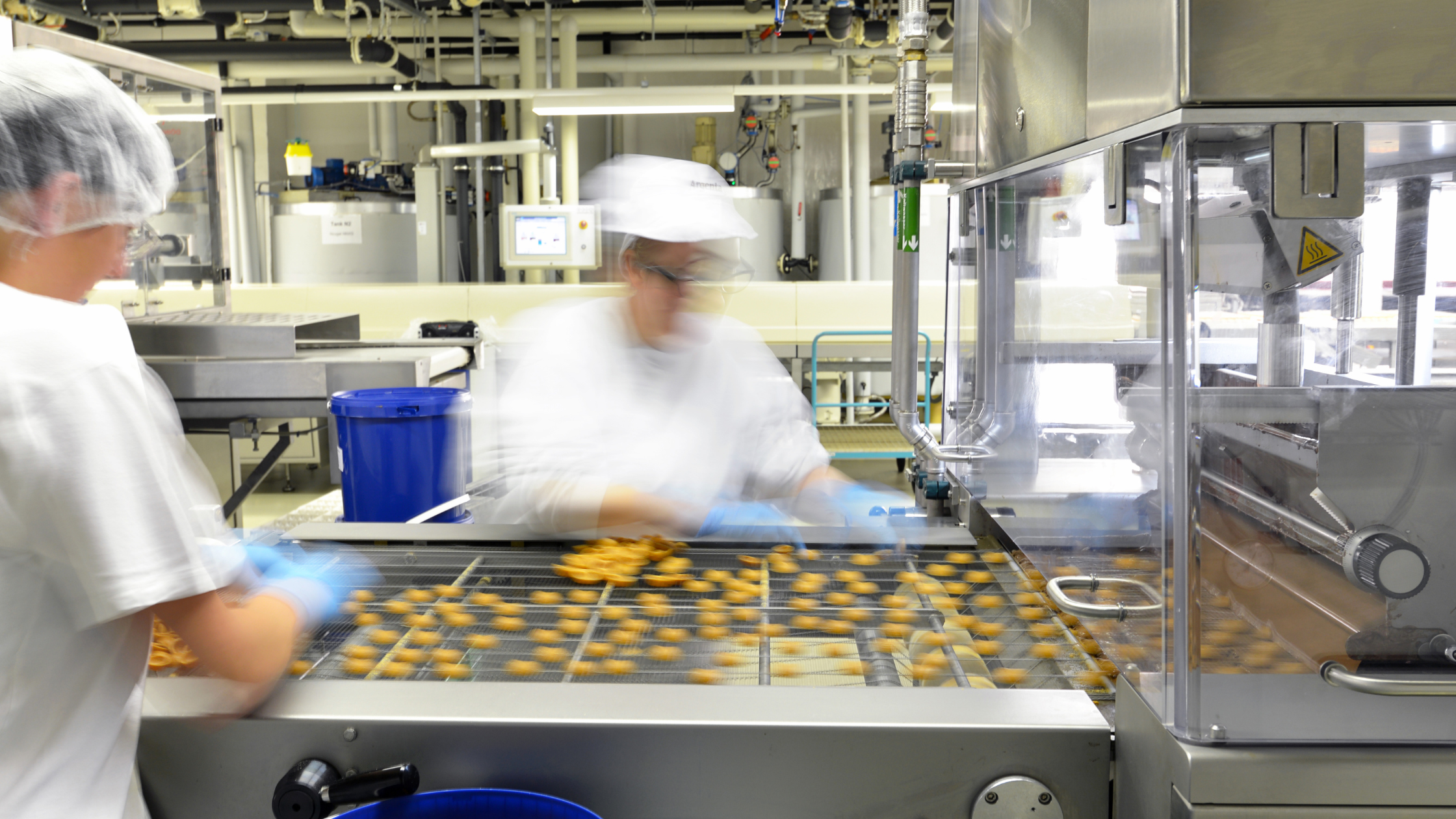
A pilot dryer can make an excellent snack. That does not mean the same process is ready for commercial production.
The most common equipment mistake in scaling snack production is not necessarily choosing the wrong dryer. It is treating the dryer as if it were the factory. In reality, dryer capacity is only useful when receiving, preparation, loading, testing, inspection, packaging, sanitation, labor, utilities, and material movement can operate at the same practical rate.
FDA’s hazard-analysis requirements reinforce this systems view. A food-safety assessment must consider the facility and equipment, raw materials, processing procedures, packaging, storage, sanitation, and other relevant factors, not one machine in isolation.
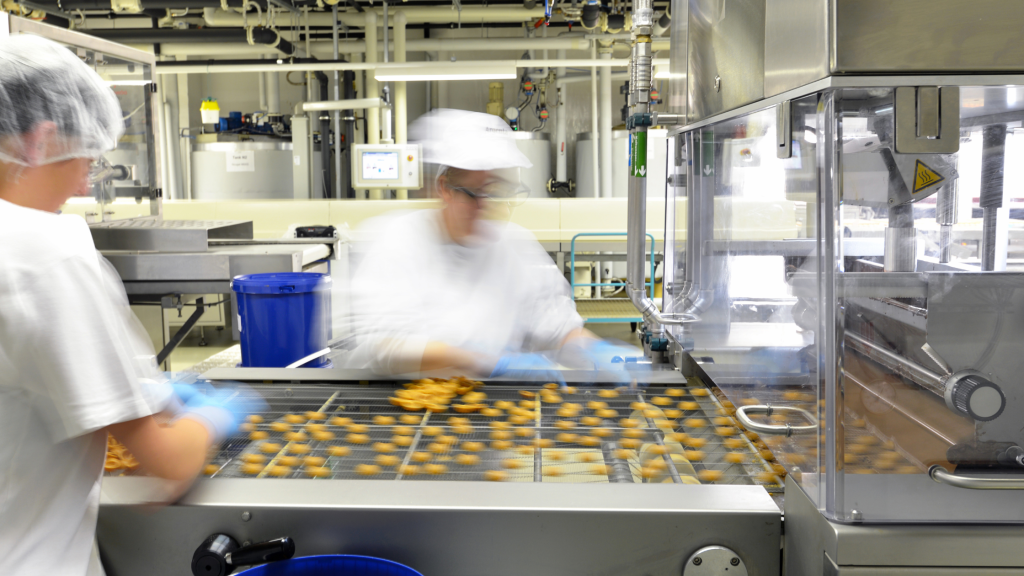
Why does dryer capacity differ from finished-line capacity?
A dryer’s rated capacity describes the dryer under defined conditions. Finished-line capacity describes how much conforming, packaged product your facility can reliably ship.
A useful capacity model begins with saleable finished product per hour, not kilograms or pounds entering the dryer. Account for fresh-to-dried yield, rejected pieces, startup and shutdown, loading and unloading, sampling, quality holds, sanitation, changeovers, unplanned downtime, and packaging losses.
Research on food manufacturing systems shows why this matters. Production lines are integrated combinations of people, products, equipment, queues, conveyors, testing, storage, and packaging. Improving one operation does not necessarily improve total output if another resource remains constrained.
Measure at least:
- Prepared wet feed per hour
- Water removed per hour
- Saleable dry yield
- Complete batch or residence time
- Loading, unloading, cleaning, and changeover time
- Uptime during a normal shift
- Quality-release time
- Packaging output in finished packs per hour
- Labor hours per production run
- Breakage, giveaway, rejection, and rework rates
For a batch process, include the complete cycle from preparation through turnaround, not only the time under vacuum. For a continuous process, confirm that feed preparation, discharge handling, inspection, and packaging can maintain the required flow without repeated stops.
Where do food manufacturing bottlenecks usually appear?
The real bottleneck is the step that limits sustained saleable output. It may move as production volume, product mix, staffing, or package format changes.
| Common bottleneck | What causes it | What to measure before purchase |
|---|---|---|
| Raw-material preparation | Inconsistent receiving, washing, sorting, cutting, peeling, or pretreatment | Prepared kilograms or pounds per hour, piece-size variation, labor per lot |
| Dryer loading | Manual loading, uneven bed depth, staging delays | Load weight, loading time, geometry, turnaround time |
| Drying | Product-specific moisture load, recipe, thickness, or batch variation | Water removal, cycle time, target moisture and water activity |
| Quality release | Limited instruments, sampling delays, retesting | Samples per lot, test time, hold time, instrument capacity |
| Material movement | Manual carts, unsuitable conveyors, insufficient accumulation | Transfer time, buffer volume, breakage rate |
| Inspection | Manual sorting or poorly integrated rejection systems | Inspection speed, reject rate, false-reject rate |
| Packaging | Slow weighing, filling, sealing, coding, or case packing | Packs per minute, changeover time, seal rejects, giveaway |
| Sanitation | Difficult access, wet-cleaning recovery, allergen changeovers | Cleaning time, drying time, verification and release time |
| Utilities | Insufficient electrical, cooling, compressed-air, HVAC, or drainage capacity | Peak and average demand, recovery time, redundancy |
| Labor | Too many manual touchpoints or specialized operator requirements | People per shift, task time, overtime, cross-training coverage |
A small buffer can separate two operations with slightly different cycle times. It cannot rescue a permanently undersized packaging line or an inspection step that stops the process every few minutes.
How does raw-material variability affect commercial drying?
Commercial dryers perform more consistently when the incoming product is consistent. Size, thickness, maturity, composition, initial moisture, pretreatment, and loading geometry all affect heat and moisture movement.
Raw-material handling may require receiving inspection, washing, sorting, peeling, trimming, cutting, blanching or other pretreatments, cold storage, and controlled staging. These operations must supply the dryer at the required rate without allowing excessive waiting, warming, or moisture variation.
This is one reason a pilot recipe cannot be transferred using time and temperature alone. In freeze drying, for example, research shows that raw-material composition, pretreatment, freezing rate, chamber pressure, shelf temperature, load, and product thickness influence process efficiency and final quality. The same commercial discipline applies when developing microwave vacuum drying protocols. Incoming geometry and loading conditions should be specified and verified.
Why do moisture content and water activity both matter?
Moisture content tells you how much water is present. Water activity describes the relationship between water in the food and water vapor under equilibrium conditions, which is closely connected to microbial and quality stability.
FDA defines water activity as the ratio of vapor pressure above the food to the vapor pressure of pure water under the same conditions. The agency also notes that water activity affects food stability and should be brought to an appropriate level after drying and maintained during storage.fda
Commercial scale-up therefore needs more than “dry to a crunch.” Establish:
- A defined moisture specification and analytical method
- A product-specific water-activity limit
- Calibrated and maintained instruments
- A sampling plan that captures within-load variation
- Lot-release and deviation procedures
- Verification after packaging and during shelf-life testing
FDA regulations require instruments used to measure water activity and other conditions controlling undesirable microorganisms to be accurate, precise, adequately maintained, and sufficient for their intended use.
What inspection and foreign-material controls are needed?
Inspection equipment should follow the product’s documented hazard analysis, not a universal equipment checklist.
FDA requires hazard analysis to consider reasonably foreseeable biological, chemical, and physical hazards, including stones, glass, and metal fragments. Depending on the product and process, controls may include supplier programs, visual sorting, sieves, magnets, screens, metal detection, X-ray inspection, or combinations of these measures.ecfr
The correct choice depends on the likely material, product density, package type, equipment position, required sensitivity, and the facility’s preventive controls. A metal detector should not be added simply because another snack factory has one, and an X-ray system should not be assumed to detect every material. The food-safety team should document why the selected control is appropriate and how it will be verified.
Why do sanitation and environmental controls affect capacity?
If equipment cannot be cleaned, dried, inspected, and released efficiently, sanitation becomes a production constraint as well as a food-safety concern.
Under 21 CFR 117.35, food-contact surfaces for low-moisture foods must be clean, dry, and sanitary before use. When wet cleaning is necessary, surfaces must be thoroughly dried before subsequent production where required. Equipment must also be installed to facilitate cleaning and maintenance of both the machine and adjacent spaces.
This affects floor plans, drainage, access platforms, removable parts, allergen changeovers, hygienic zoning, and cleaning-method selection. For low-moisture ready-to-eat products, FDA’s draft guidance emphasizes sanitation programs, environmental monitoring, root-cause investigation, and the limitations of relying only on finished-product testing.fda
Humidity and condensation also deserve attention. CFIA guidance notes that condensate may contaminate exposed food, weaken some packaging, or support bacterial growth on equipment. Controls should be based on the facility’s specific hazard assessment rather than a single humidity target.canada
Can packaging become the bottleneck?
Yes. A faster dryer can simply create a larger queue of unpackaged product.
Packaging may include cooling, accumulation, conveying, multi head weighing, pouch filling, nitrogen flushing where appropriate, sealing, coding, check weighing, foreign-material inspection, case packing, and palletizing. Each stage has its own changeovers, film replenishment, rejects, cleaning, and labor requirements.
Final product characteristics also change the packaging problem. A warm product may require cooling. A fragile or low-bulk-density snack may need gentler drops, larger packages, or slower conveying. Powders and crumbs can interfere with seals. An intermittent batch discharge may require more buffer capacity than a steady continuous flow.
Packaging is also part of shelf-life design. EnWave’s public guidance correctly notes that dehydration and packaging should be tested together because moisture barrier, oxygen control, and seal integrity help maintain the condition established by drying.
What plant utilities and infrastructure should be checked?
Confirm infrastructure before issuing a purchase order, not after equipment arrives.
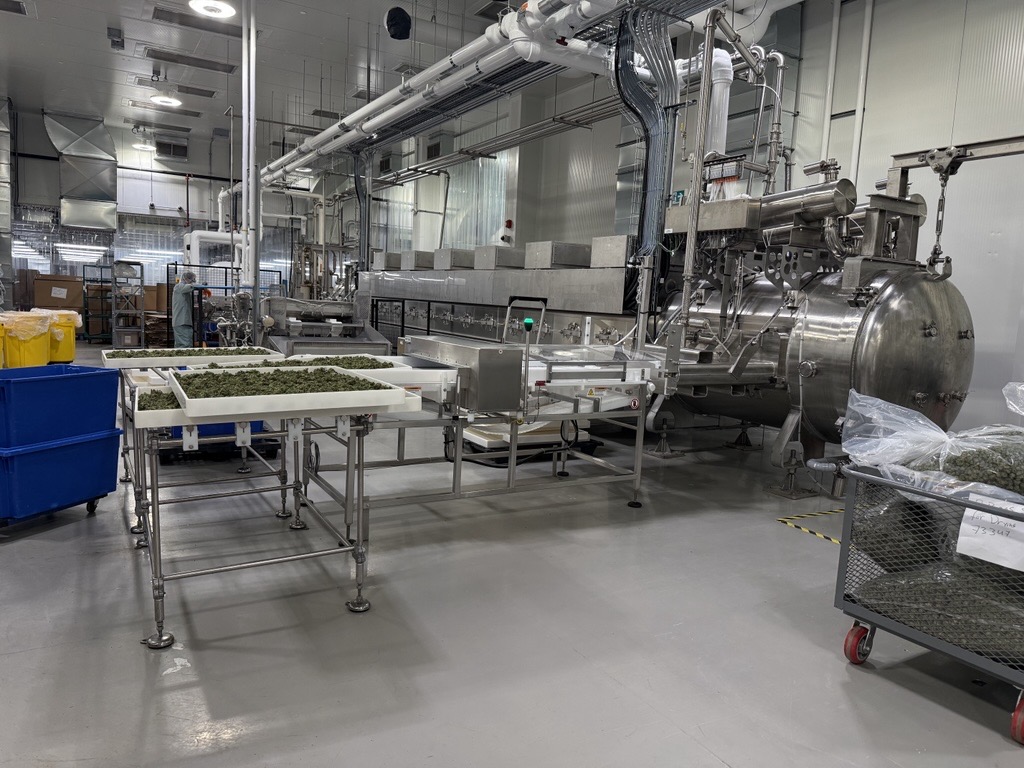
Review electrical service and distribution, cooling requirements, vacuum systems, compressed air, water, drainage, HVAC, refrigeration where applicable, network connections, ventilation, floor loading, ceiling height, door and rigging access, fire and building requirements, maintenance clearance, and backup capacity.
Do not size utilities from average demand alone. Ask for startup loads, peak loads, operating ranges, heat rejection, water quality, discharge requirements, and simultaneous demand from upstream and downstream equipment.
EnWave materials describe a pathway from smaller batch equipment used for product development toward larger continuous commercial REV™ configurations. The final utility and layout requirements, however, should always come from the approved equipment specification and site review.
When should labor and automation be reconsidered?
Automation becomes relevant when manual work can no longer match the required rate consistently, safely, or economically.
Map every touchpoint. Typical labor requirements include receiving, washing, cutting, tray or basket loading, unloading, inspection, sampling, cleaning, pouch loading, case packing, palletizing, and material replenishment.
Automation does not have to mean a fully automated factory. The best first investment may be a cutter, feeder, conveyor, accumulation table, weighing system, bagger, case sealer, or palletizing aid. Base the decision on measured task time, staffing availability, ergonomics, product damage, sanitation implications, and the expected product mix.
How should commercial freeze drying and REV™ be compared?
Compare complete factory systems and product outcomes, not only dryer purchase prices or sample quality.
Commercial freeze drying remains a strong option for products that prioritize structure, nutrient retention, and rehydration. A recent review describes freeze drying as a benchmark for premium shelf-stable foods while also identifying prolonged processing, energy demand, batch operation, mechanical fragility, and scalability as important industrial considerations.
REV™ uses controlled microwave energy under vacuum to remove moisture. EnWave states that vacuum lowers water’s boiling point while microwave energy heats the product volumetrically, with pressure and microwave power used to manage temperature and final moisture.
An independent study by Mohammadi and colleagues compared REV™, air drying, and freeze drying for broccoli, oranges, and carrots. REV™ significantly shortened processing time for the tested products, retained more vitamin C and beta-carotene than air drying, and produced values competitive with freeze-dried samples. Freeze drying delivered the best rehydration result. These findings are product- and protocol-specific and should not be generalized to every food.
From a factory-design perspective, REV™ may offer advantages where shorter cycles, continuous commercial configurations, a smaller process footprint, and a staged path from product trials to commercial equipment are priorities. Freeze drying may remain preferable where its particular structure and rehydration outcomes justify the batch workflow. Product trials, full-line economics, and validated quality targets should make the decision.
Before you buy a commercial dryer
- Define the product specification including size, shape, initial moisture, target moisture, water activity, texture, color, temperature, and shelf-life goal.
- Map raw-material receiving and preparation including washing, sorting, cutting, peeling, pretreatment, cold storage, and staging.
- Calculate saleable output using yield, uptime, complete cycle time, changeovers, cleaning, and rejection—not nameplate capacity alone.
- Validate loading conditions including bed depth, piece geometry, load weight, feed consistency, and discharge format.
- Build the quality-control plan covering moisture testing, water activity, sampling, calibration, lot release, and recordkeeping.
- Complete the hazard analysis before selecting sieves, magnets, metal detection, X-ray, or other inspection systems.
- Size conveyors and buffers for the product’s fragility, bulk density, discharge pattern, and packaging requirements.
- Confirm environmental controls including hygienic zoning, humidity, ventilation, condensation prevention, and post-process protection.
- Design packaging around the product including weighing, filling, sealing, gas flushing where justified, coding, checkweighing, case packing, and palletizing.
- Verify plant utilities and building fit including electrical capacity, cooling, vacuum, compressed air, water, drainage, HVAC, floor loading, access, and maintenance clearance.
- Model labor requirements for every shift, cleaning event, changeover, quality check, and material-handling task.
- Plan sanitation and allergen changeovers with realistic access, drying, verification, and restart times.
- Review maintenance and spares including wear parts, service response, calibration, and critical-component redundancy.
- Confirm warehouse strategy for raw materials, packaging, quality holds, finished goods, and seasonal inventory.
- Protect room for expansion by reserving utility capacity, floor space, access routes, control-system capability, and downstream packaging capacity.
Frequently Asked Questions
How do you calculate commercial dryer capacity?
Begin with required saleable dry product per day. Work backward through finished yield, water removal, uptime, complete cycle time, changeovers, quality holds, and packaging output.
What equipment does a dried snack factory need?
The exact list is product-specific, but it may include receiving and preparation equipment, staging, drying, cooling, testing, conveying, inspection, packaging, sanitation, utilities, warehousing, and material-handling systems.
Can packaging limit dryer output?
Yes. If weighing, filling, sealing, inspection, or case packing cannot keep pace, product accumulates and upstream equipment must slow or stop.
Why is water activity testing important?
Water activity relates to the water available for microbial and quality-related reactions. It answers a different question from total moisture content and should be verified against a product-specific specification.fda
When should conveyors or packaging be automated?
Consider automation when measured manual task times, staffing instability, variation, ergonomics, or product damage prevent the line from reliably meeting its required rate.
What utilities do commercial dryers require?
Requirements vary by technology and model. Confirm electrical, cooling, water, vacuum, compressed air, HVAC, drainage, ventilation, and network requirements from the final supplier specification.
How much space should be left for expansion?
There is no universal percentage. Reserve space based on the expansion scenario, equipment access, utility routes, sanitation clearances, buffer capacity, packaging growth, and the possibility of adding parallel equipment.
How does REV™ scale-up differ from commercial freeze drying?
EnWave offers a development path that moves from smaller product-development systems toward larger commercial configurations, including continuous systems. Commercial freeze drying is commonly batch-based, so capacity planning must account for freezing, loading, drying, unloading, defrosting, cleaning, and packaging.
Build the line before buying the machine
The central question is not “How large should our dryer be?” It is “What complete production system can deliver our required quantity of safe, consistent, packaged product?”
For founders, R&D teams, food manufacturers, and operations leaders evaluating commercial food drying, microwave drying equipment, production scaling, or alternatives to commercial freeze drying, EnWave can help connect product development with commercial process planning. Talk with our team about testing your product and defining the equipment, throughput, and integration requirements around it.
Further reading

