

Shelf Stability as an FMCG Growth Engine
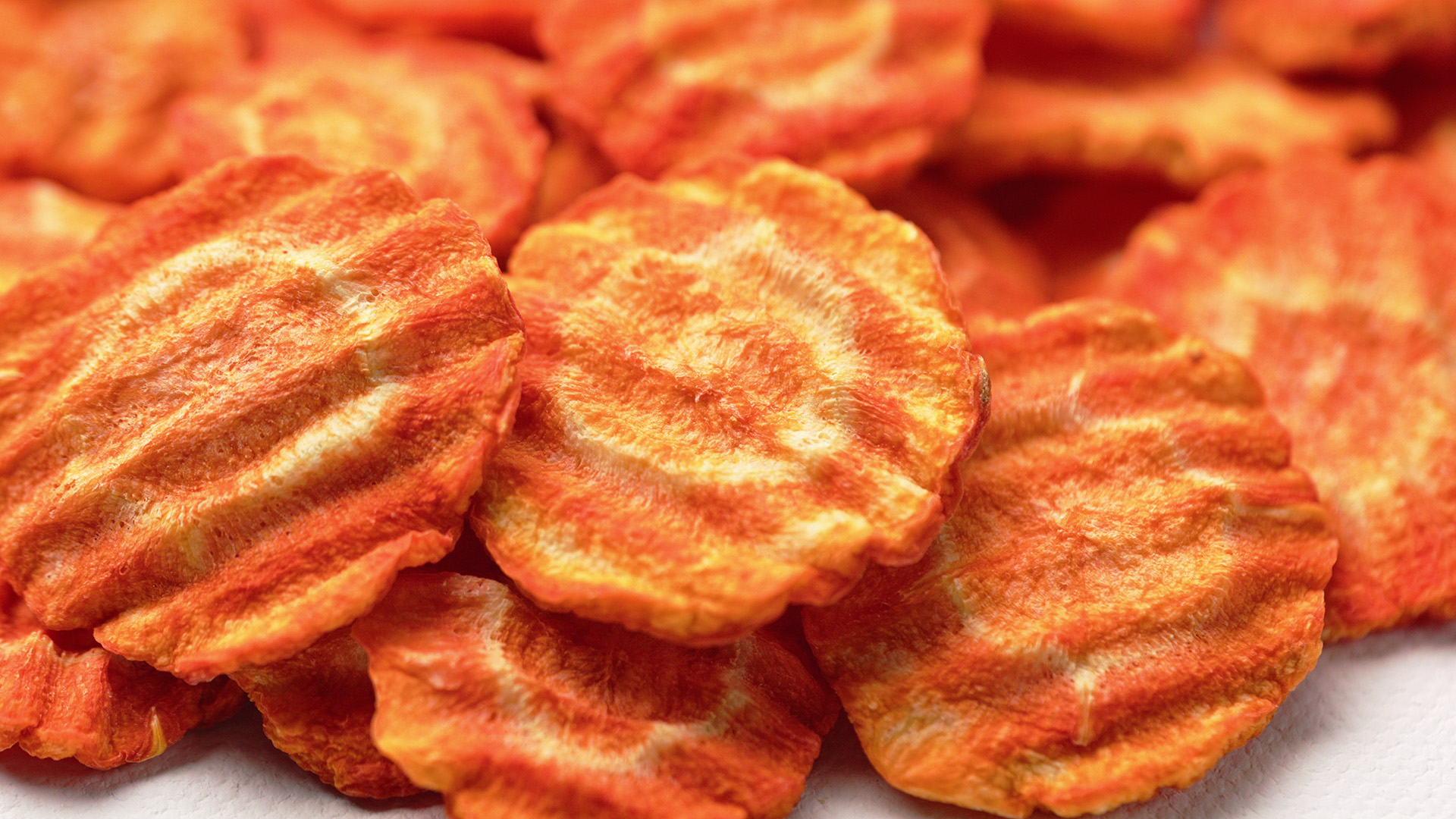
Shelf stability is more than a food science target. For FMCG brands, it can determine where a product can be sold, how far it can travel, how much inventory flexibility a retailer has, and whether an innovative concept can scale beyond a refrigerated or frozen niche.
Foods that can be stored safely at room temperature are considered shelf stable. Commercial products reach that state through validated combinations of processing, formulation, drying, packaging, and storage controls. Drying can be an important part of the solution, but it is not a stand-alone guarantee of safety or quality.

Shelf-stable FMCG products can help brands pursue:
- Broader distribution through ambient retail, ecommerce, vending, travel, foodservice, and export channels
- Lower cold-chain dependence where the product’s validated safety and quality allow ambient storage
- More efficient storage and transportation because water removal can reduce product weight and volume
- Longer selling windows that may reduce spoilage and inventory write-offs
- New product formats including fruit snacks, dairy crisps, protein bites, powders, and meal inclusions
- Greater texture flexibility when the drying process is designed around a specific crunchy, chewy, porous, or rehydratable result
The commercial opportunity begins with food preservation technology, but it depends on disciplined product development. Target water activity, moisture distribution, formulation, packaging, oxygen exposure, storage temperature, food safety controls, and shelf-life validation must work as one system.
Why can shelf stability drive FMCG growth?
Shelf stability can turn a processing decision into a distribution advantage. A product that safely maintains its intended quality at ambient temperature may enter channels that would be impractical for a refrigerated equivalent.
Ambient food products can be easier to place in conventional grocery aisles, convenience stores, ecommerce fulfillment systems, travel retail, and locations with limited refrigeration. Industry reporting also connects longer shelf life with smoother storage, lower dry-transport costs compared with refrigerated formats, and access to retail space beyond the refrigerated case.
Removing water also makes many foods lighter and more compact. FAO guidance identifies reduced weight and volume, lower packing and transportation requirements, and ambient storability as established advantages of dehydration. Virginia Tech similarly notes that dehydrated foods weigh less than their fresh counterparts and may not require refrigeration when properly processed and stored.
These benefits do not mean every refrigerated product should become shelf stable. The stronger commercial question is whether an ambient format creates enough consumer and supply-chain value while preserving the attributes that make the product worth buying.
What actually makes a food shelf stable?
A food is shelf stable when its complete formulation, process, package, and storage system prevent unacceptable safety or quality deterioration for the stated shelf life. Drying is one control, not the entire answer.
A shelf-life program should consider:
- The food’s initial microbial load and required lethality controls
- Final water activity and moisture distribution
- Product pH, salt, sugar, preservatives, or other formulation hurdles
- Oxygen sensitivity and fat composition
- Packaging permeability and seal integrity
- Expected temperature, humidity, and light exposure
- Real-time or properly designed accelerated shelf-life testing
USDA guidance explains that foods may be made shelf stable through heat, drying, sterile packaging, or combinations of controls. The FDA likewise treats water activity as one preservation factor that must be understood alongside product composition and processing conditions.
This distinction matters for protein and dairy products. A low water activity may prevent microbial growth, but the product could still deteriorate through oxidation, flavor loss, browning, moisture migration, or texture changes. Shelf life ends when safety or an agreed quality attribute moves outside the validated specification.
How are moisture content and water activity different?
Moisture content measures how much water is present. Water activity measures how available that water is for microorganisms and chemical reactions. The two values are related, but they are not interchangeable.
The FDA defines water activity as the ratio of the vapor pressure of water in a food to the vapor pressure of pure water under the same conditions. Some water may be tightly bound to proteins, carbohydrates, salts, or sugars and therefore less available to support microbial growth.
This explains why two products with similar moisture content can behave differently during storage. Their ingredients and physical structures bind water differently, producing different water activity values and different risks.
The FDA uses 0.85 water activity as an important regulatory reference point in specific food categories. That number should not be treated as a universal product-development target. Some dried foods require lower values to control molds, protect crispness, prevent caking, or meet category-specific standards. The appropriate specification must be established for the actual formulation and intended storage conditions.
Why does packaging still matter after drying?
The dryer establishes the product’s starting condition. The package helps maintain it. A poorly matched package can allow a correctly dried product to absorb moisture, oxidize, lose aroma, or soften before its intended shelf life is reached.
Packaging development should evaluate water vapor transmission, oxygen transmission, headspace, seal quality, light protection, package size, and expected distribution conditions. IFT notes that moisture, oxidation, microbial growth, oxygen availability, temperature, and relative humidity can all affect shelf life and package selection.
The package must match the product:
- Crispy snacks need strong moisture protection to resist softening.
- Fat-rich dairy and protein snacks may need tighter oxygen control to limit rancidity.
- Powders need protection against moisture pickup, clumping, and aroma loss.
- Multi-component foods need attention to moisture migration between inclusions.
- Light-sensitive ingredients may require opaque or high-barrier structures.
Foil laminates, for example, can substantially reduce oxygen and moisture transmission. However, package material alone is not enough. Closure integrity, residual headspace oxygen, product oil content, and storage temperature must be included in the shelf-life study.
How does REV™ vacuum microwave dehydration work?
REV™ combines microwave energy with vacuum pressure to remove moisture rapidly under controlled conditions. The vacuum lowers the boiling point of water, while microwave energy is absorbed within the product rather than relying only on heat transfer from its surface.
This volumetric heating supports rapid internal moisture movement. By adjusting microwave power, pressure, temperature, residence time, and product loading, development teams can work toward target final moisture, water activity, and texture.
The process is designed around control rather than maximum dryness. A crunchy cheese snack, chewy fruit piece, functional powder, and meal inclusion may each require a different endpoint. Drying beyond what the product requires may waste energy or damage sensory quality, while under-drying may compromise stability.
EnWave supports development from pilot testing toward commercial food drying. The objective is to establish a repeatable processing window that can be transferred into scalable equipment while maintaining the product’s critical quality and safety specifications.
How does REV™ compare with freeze drying and hot-air drying?
No drying method is best for every food. The right choice depends on product structure, sensitivity, texture, required throughput, final use, and commercial economics.
| Method | How it removes moisture | Where it can fit | Important trade-offs |
|---|---|---|---|
| Hot-air or rack drying | Heated air transfers energy from the surface while moisture moves outward | Familiar processes, cost-sensitive products, robust ingredients | Longer heat and oxygen exposure can contribute to shrinkage, case hardening, color change, or loss of sensitive compounds |
| Freeze drying | Frozen water sublimates under vacuum | Highly porous products, strong rehydration requirements, very heat-sensitive materials | Often involves long batch cycles, freezing infrastructure, and higher capital or operating complexity |
| REV™ vacuum microwave dehydration | Microwave energy heats moisture volumetrically under vacuum | Premium snacks, ingredients, flexible textures, rapid product development, commercial scale-up | Requires product-specific process development and may not be the best choice when maximum freeze-dried porosity or rehydration is essential |
Vacuum allows water removal at lower temperatures and can increase the rate of moisture removal, which is useful for heat-sensitive foods. It also emphasizes that dryer selection should reflect raw-material properties, desired product form, operating conditions, and cost.
A peer-reviewed 2020 Foods study compared REV™, freeze drying, and air drying for broccoli, orange, and carrot samples. REV™ significantly shortened processing time in the tested protocols. The REV™ samples retained more vitamin C and beta-carotene than the air-dried samples and produced nutrient values competitive with the freeze-dried samples.
Freeze drying delivered the strongest rehydration performance in that study, while REV™ samples received the highest overall sensory scores under the specific test conditions. These findings are promising, but they apply to the foods, equipment, pretreatments, and process parameters studied. They should not be generalized to every formulation without product-specific testing.
Which shelf-stable product opportunities fit REV™?
REV™ can support multiple FMCG categories, but each requires a different development strategy. The same water activity or packaging specification should not be copied across unrelated foods.
Dried fruits and vegetables
Fruit and vegetable development often balances crispness or chewiness with color, aroma, browning control, nutrient retention, and structural integrity. Sugar content, acidity, piece size, ripeness, skin structure, and pretreatments can all change drying behavior.
Possible formats include slices, cubes, inclusions, smoothie components, vegetable crisps, garnishes, and powders. The REV™, freeze-dried, and air-dried produce study demonstrates why trials should measure both physical quality and nutrient markers rather than focusing only on final moisture.
Cheese and dairy snacks
Dairy snacks introduce fat oxidation, protein behavior, salt distribution, and flavor retention into the shelf-life equation. Cheese pieces may be developed as crunchy snacks, while yogurt-based formulations may require stabilizers, solids adjustment, or other formulation work before drying.
For these products, teams should validate water activity, lipid oxidation, texture change, package oxygen, flavor stability, and microbiological controls. A low final moisture number alone does not establish a commercial shelf life.
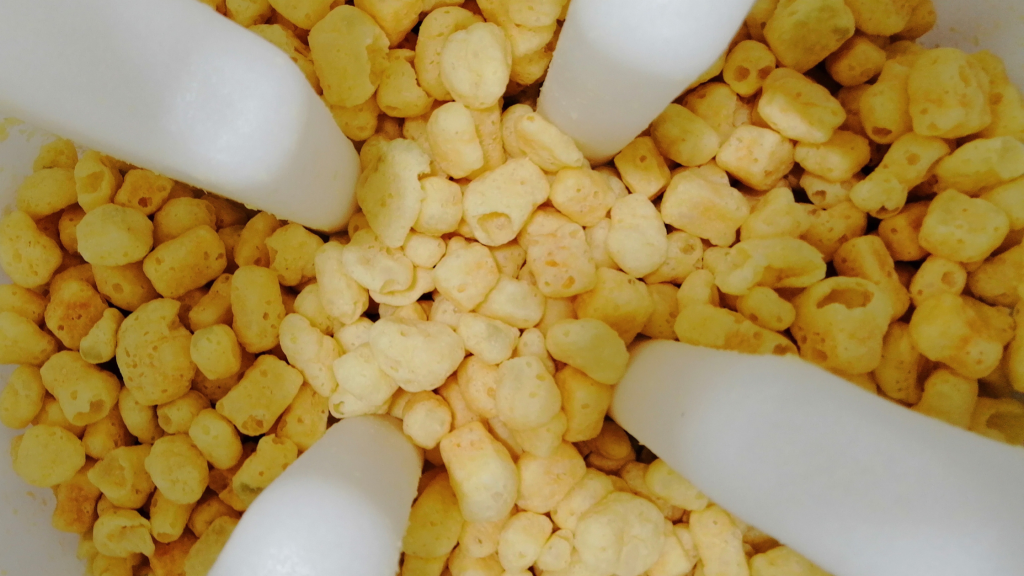
Protein snacks and powders
Meat, poultry, seafood, egg, and alternative-protein products require especially careful food safety planning. Drying should not be assumed to replace an appropriate validated lethality step.
Potential formats include jerky, protein bites, crisp pieces, meal components, and milled powders. Product thickness, fat level, salt, pH, cooking history, target texture, oxygen control, and storage temperature should all be evaluated. USDA and university guidance emphasize the importance of pathogen controls when drying meat and poultry products.
Functional ingredients and powders
Functional powders may be sensitive to heat, oxygen, or extended processing exposure. Development should identify the marker that creates product value, such as a vitamin, aroma compound, enzyme, microorganism, pigment, or rehydration property, and measure it before and after drying.
Commercial decisions should be based on retained functionality over the full shelf life, not solely on process speed. The 2020 produce study, for example, found that moisture content and water activity remained stable during accelerated storage while nutritional values still declined, demonstrating that microbial stability and nutrient stability are different questions.
Meal inclusions and formulated foods
Formulated products can contain fats, starches, sugars, proteins, sauces, and particulates with different water-binding properties. This creates risks of uneven heating and internal moisture migration.
R&D teams should test the complete formulation rather than extrapolating from one ingredient. For products intended to rehydrate, rehydration speed and texture after preparation are just as important as stability in the dry state.
How should teams develop an extended shelf life food product?
Start with measurable commercial and technical targets, then develop the process and package together. A practical stage-gate approach is:
- Define the consumer format and distribution channel.
- Identify the limiting safety and quality attributes.
- Set preliminary moisture, water activity, texture, and nutrient targets.
- Compare drying methods using the same prepared formulation.
- Select packaging based on moisture, oxygen, light, and mechanical sensitivity.
- Complete food safety and process validation.
- Run real-time and appropriately designed accelerated shelf-life studies.
- Confirm repeatability before commercial scale-up.
This approach avoids a common mistake in food innovation: selecting microwave drying equipment, a freeze dryer, or an air dryer before defining what the finished product must accomplish.
Make shelf stability part of the growth strategy
Shelf stability works best when it is treated as a commercial design requirement from the beginning, not a final quality-control check. The drying method influences texture, flavor, throughput, packaging needs, product cost, and the channels a brand may be able to serve.
For manufacturers comparing commercial freeze drying, rack drying, hot-air drying, or vacuum microwave dehydration, EnWave can help evaluate whether REV™ fits the product and business case. Our team works with food manufacturers and R&D teams to develop process parameters, assess product quality, and plan a pathway from trials toward commercial production.
Talk with EnWave about your next shelf-stable product.
Frequently asked questions
Does dehydration automatically make food shelf stable?
No. Dehydration can lower water activity, but shelf stability also depends on formulation, initial microbial load, required lethality controls, packaging, oxygen exposure, storage temperature, and validated shelf-life performance.
Is water activity the same as moisture content?
No. Moisture content measures the total quantity of water, while water activity measures how available that water is for microbial growth and chemical reactions.
Is REV™ the same as commercial freeze drying?
No. Freeze drying removes ice through sublimation after freezing. REV™ uses microwave energy under vacuum to remove moisture through rapid, controlled volumetric heating. Each can be appropriate for different product and quality objectives.
Can dried food be distributed without refrigeration?
Some properly formulated, processed, packaged, and validated dried foods can be distributed at ambient temperature. The decision must be based on the specific product’s safety assessment, water activity, packaging, and storage requirements.
What products can be developed with REV™?
Potential applications include fruits and vegetables, cheese and yogurt snacks, meat and alternative-protein snacks, functional ingredients, powders, formulated foods, and meal inclusions. Suitability and performance must be confirmed through product-specific development and validation.
Further reading
- EnWave guidance on extending shelf life with REV™
- EnWave production scaling
- EnWave drying method limitations
- FDA guidance on water activity in foods
- USDA shelf-stable food safety guidance
- FAO guidance on dehydration and water activity
- Mohammadi et al. in Foods on REV™, freeze drying, and air drying
- IFT guidance on packaging and shelf-life development
- Utah State University food storage packaging guidance

