
Snack Texture Trends in 2026
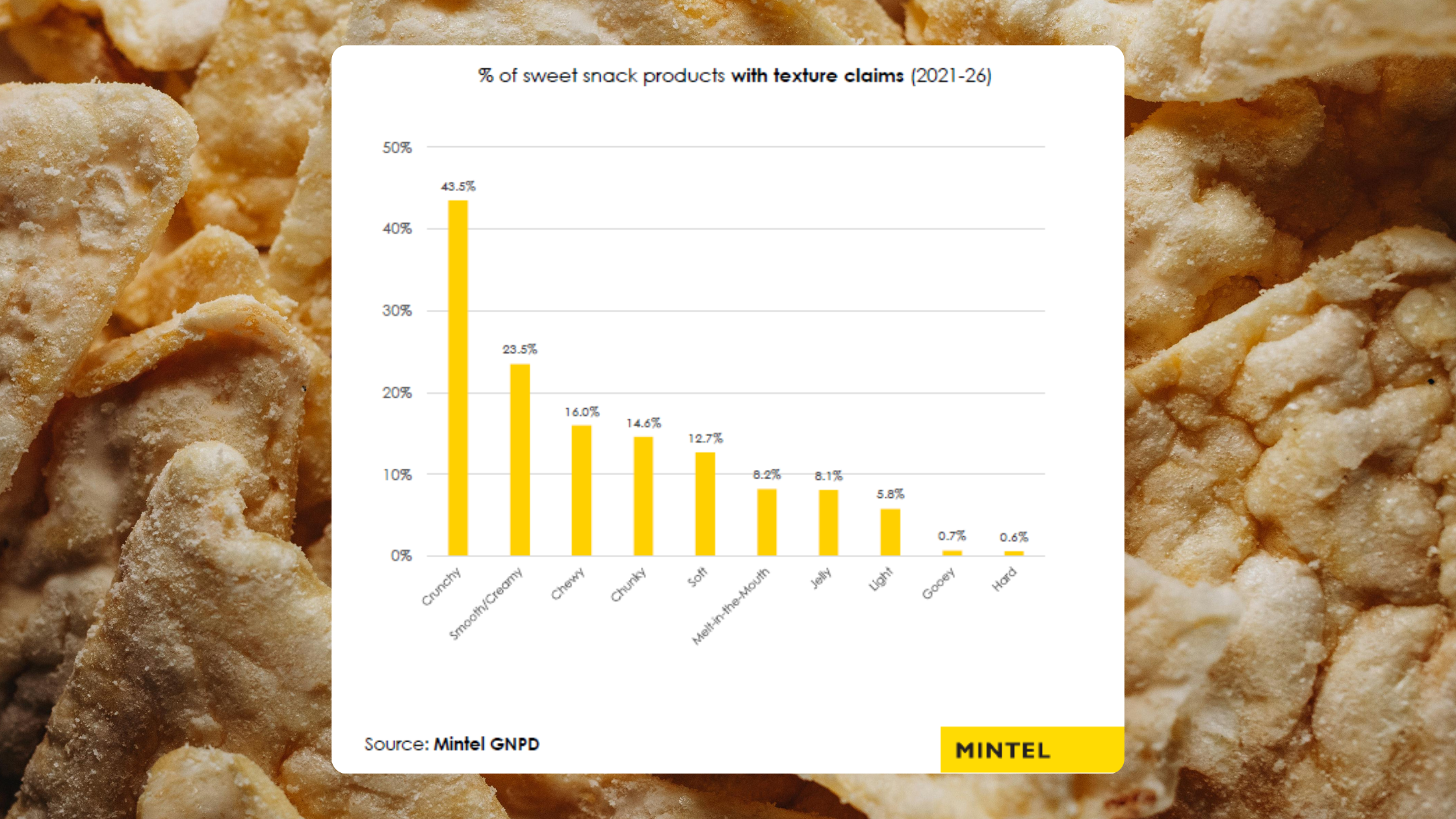
Crunchy has dominated sweet snacking for years, but it is no longer enough to stand out. Mintel’s 2026 texture analysis shows crunchy is everywhere, while chewy and gooey are gaining faster because they offer contrast and novelty. For food innovators, that creates a clear opening. The brands that win will design texture on purpose and use processing methods that make those textures repeatable at scale.
Why Is Crunchy No Longer Enough?
Crunchy is no longer enough because it has become the default texture signal in snacks. Mintel reports that crunchy shows up in almost half of sweet snack launches with a texture claim, and in nearly 1 in 5 sweet snack launches in 2026. That level of concentration makes crunchy familiar, but also crowded.
Consumers still like crunch, but they are no longer surprised by it. The shelf effect is sameness, not differentiation. For product development teams, that means crunchy can support a snack, but it rarely carries the whole idea anymore.
What texture trends are growing fastest?
The fastest growing texture trends are chewy and gooey, with soft and melt in the mouth also rising. Mintel’s report shows that these textures sit at relatively low launch penetration, but consumer conversations are rising quickly. That gap between demand and supply is where the opportunity sits.
This matters because people are reaching for more than just one bite experience. They want contrast, surprise, and a texture journey. In other words, the best snacks are becoming more like experiences than simple foods.
Why does texture matter so much in food innovation?
Texture matters because it shapes how a product feels before consumers even finish the bite. It influences indulgence, novelty, and whether a snack feels premium or ordinary. That is why texture innovation has become a major part of food innovation.
For food tech teams, this changes the product brief. Success is not only about flavour or nutrition anymore. It is also about designing mouthfeel with intent and making sure the texture promise holds up in production.
How do brands create texture that stands out?
Brands create standout texture by using contrast. Mintel’s report points to layered textures, multi sensory experiences, and products that combine crunchy, creamy, chewy, and gooey elements. The strongest launches are the ones that turn texture into the product story, not just the finish.
A useful approach looks like this.
- Pair opposites.
- Build a bite journey.
- Make texture visible.
- Use inclusions with purpose.
- Tell the texture story on pack and online.
This is especially important because consumers are now more aware of texture language and expect the product to deliver what it claims.
Where does microwave drying fit into texture innovation?
Microwave drying fits because it helps preserve and create the ingredients that make texture work. EnWave describes REV™ as a rapid, gentle vacuum microwave process that offers precise moisture control and quality retention. That makes it useful for ingredients that need crunch, chew, or a clean bite without losing their sensory appeal.
This matters for snack development because the right drying technology can create texture, not just preserve it. Freeze dried inclusions, fruit pieces, vegetable snacks, and other shelf stable components can all contribute to a more layered and differentiated final product. For many brands, that is the bridge between a concept and a commercial product.
Why is crunchy still useful in product development?
Crunchy is still useful because it provides instant sensory impact. It is familiar, easy to understand, and can make a snack feel satisfying. The problem is not that crunchy stopped working. The problem is that it stopped being distinctive on its own.
That means product teams should think of crunch as one layer in the experience, not the whole experience. Crunch can support a snack, but chewy or gooey elements can give it a second reason to be remembered. That is where food innovation gets more interesting.
How can drying technology support chewy and gooey textures?
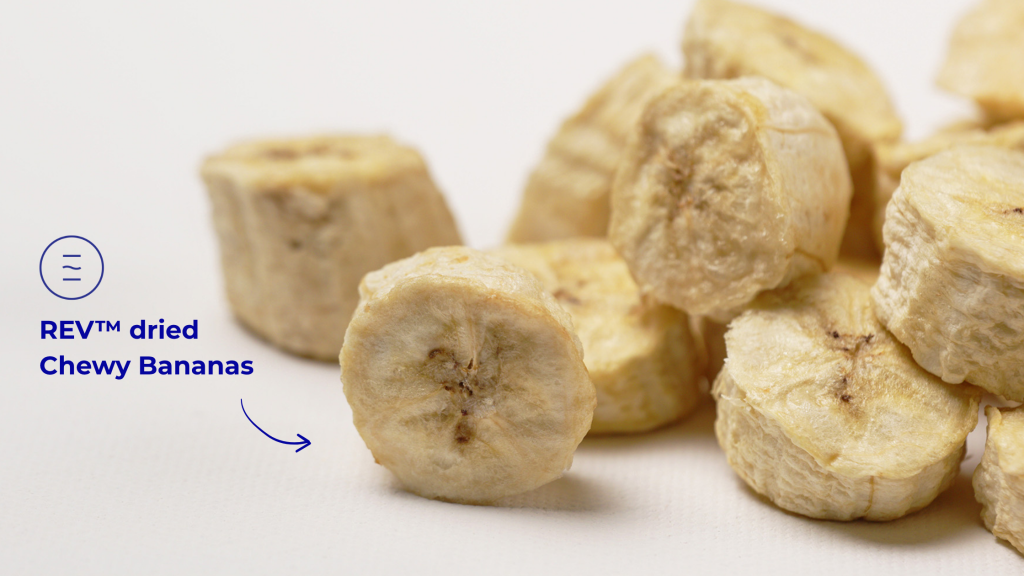
Drying technology can support chewy and gooey textures by controlling moisture more precisely. That is important because these textures depend on water activity, structure, and how the product behaves after processing. If drying is too aggressive, the texture can collapse. If it is too soft, the product may not hold shelf life.
REV™ gives product developers more control over that balance. EnWave says the process can be adapted to different food formats and moisture targets, which helps with texture outcomes. That is a major advantage for brands trying to move beyond crunchy and into more differentiated territory.
What should brands learn from the Mintel texture landscape?
Brands should learn that texture is now a real growth driver, not an optional extra. Mintel’s report shows that consumer interest in texture is growing faster than the launches designed to meet it. That means the market is under serving the space, especially in chewy, gooey, and layered formats.
The practical lesson is simple.
- Choose a texture that matches the emotional job of the product.
- Use ingredients and drying methods that can deliver that texture consistently.
- Make the texture visible in packaging and merchandising.
- Avoid leaning on crunchy alone when the shelf is full of it.
- Build products that can hold their sensory identity over time.
Those steps can help a brand avoid blending into the background.
Why does texture matter for commercial food drying?
Texture matters for commercial food drying because the drying process determines what the final product can be. If the process removes too much moisture or changes structure in the wrong way, the product may lose the very quality that made it attractive in development. That is why the choice of drying method is part of the innovation strategy.
For teams comparing commercial freeze drying, food dehydration, and microwave drying equipment, the question should be simple. Which method best protects the texture I want consumers to feel? In many cases, REV™ is attractive because it gives more flexibility in managing that outcome.
What does this mean for snack product development?
It means snack product development needs to start with texture, not just flavour. The strongest products in 2026 will likely be the ones that use layered mouthfeel, contrast, and sensory surprise to earn attention. A good flavour can bring trial, but a memorable texture can bring repeat purchase.
This is also where shelf stable ingredient development becomes important. If a brand can create crunchy inclusions, chewy centers, or gooey layers that stay consistent through distribution, it can build a stronger product platform. That is a food tech advantage, not just a formulation win.
How can brands turn texture into a product platform?
Brands can turn texture into a product platform by building multiple products around a core sensory idea. For example, a crunchy base can support chewy fillings, fruit inclusions, or gooey centers across several SKUs. That allows a company to expand without starting over every time.
A platform approach usually includes:
- A base texture system.
- A repeatable processing method.
- A set of compatible inclusions.
- A clear sensory language.
- A production process that can scale.
This is where drying technology and product innovation meet. The process has to support the idea, not fight it.
Conclusion
Crunchy is still important, but it is no longer the whole story. Mintel’s 2026 texture landscape shows that real differentiation now sits beyond crunchy, especially in chewy and gooey textures that contrast with the crowd. For food brands, that means the next wave of snack innovation will come from designing texture more deliberately.
REV™ helps make that possible by giving product teams more control over moisture, structure, and quality retention. In a market where texture is becoming the new battleground, that kind of control matters. The brands that win will not just chase crunch. They will build texture experiences that stick.
FAQ
Why is crunchy no longer a differentiator?
Because it is now widely used across sweet snack launches, making it familiar rather than unique.
Which textures are growing fastest?
Chewy and gooey are growing fast, with soft and melt in the mouth also gaining traction.
How does drying technology affect texture?
Drying technology affects moisture, structure, and stability, which all shape the final bite.
Can microwave drying help with texture innovation?
Yes. REV™ gives product teams more control over moisture and final product quality, which can support crunchy, chewy, and other differentiated textures.
Why do food innovators care about texture trends?
Because texture is now a major driver of trial, repeat purchase, and premium positioning in snacking.
How should brands respond to the texture landscape?
They should move beyond crunchy alone and build products around contrast, texture layering, and repeatable sensory experiences.
Further reading
Mintel Snacking Texture Wars 2026
EnWave What is REV
EnWave What is REV? Vacuum Microwave Dehydration Technology
EnWave Popular food drying processes explained
EnWave Vacuum Microwave Dehydration Vs Freeze Drying
Comparison of Traditional and Novel Drying Techniques and Its Application in Foods
https://pmc.ncbi.nlm.nih.gov/articles/PMC7554907
ScienceDirect Microwave Drying
https://www.sciencedirect.com/topics/agricultural-and-biological-sciences/microwave-drying