

Contract Manufacturing for Food Brands
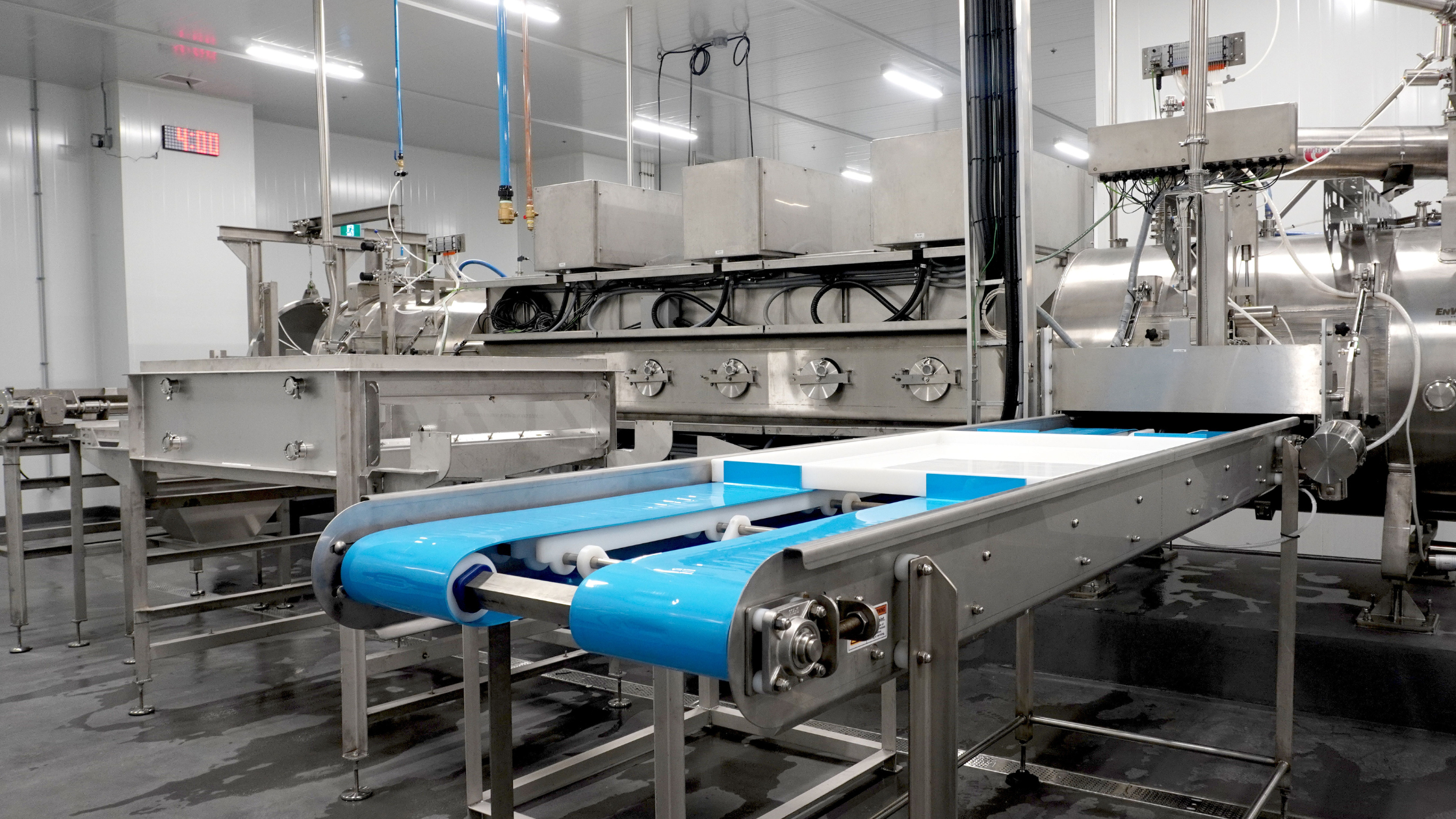
Contract manufacturing and co-manufacturing help food brands launch and scale products without investing in their own production infrastructure. By working with experienced manufacturing partners, companies can validate market demand, accelerate commercialization, and access specialized processing technologies while minimizing risk.
For brands developing REV™-dried products, co-manufacturing offers a practical bridge between product development and commercial production. Through EnWave’s network of manufacturing partners, companies can access production capacity and technical expertise while focusing on growing their business.
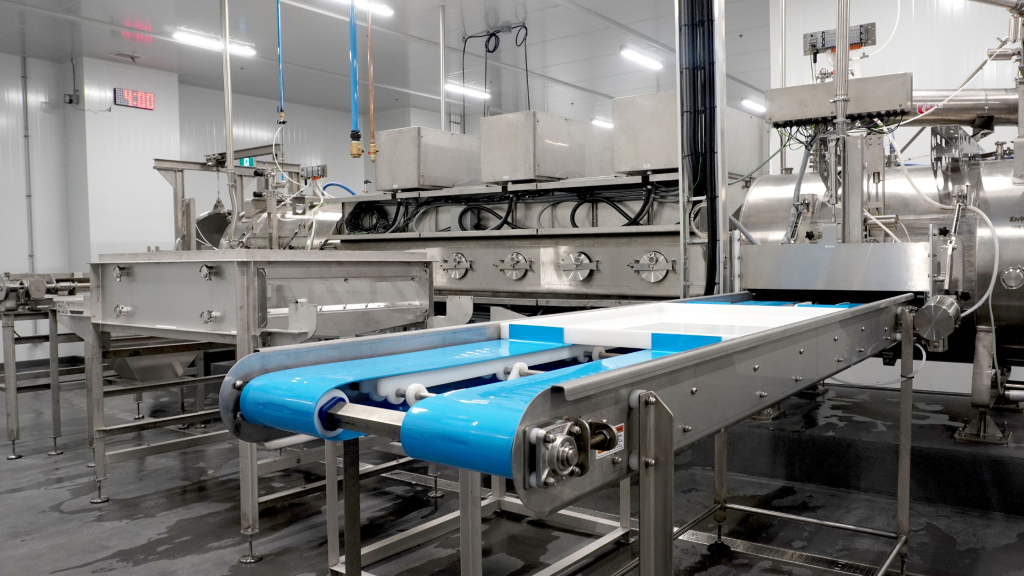
Why is moving from product development to commercial production so challenging?
Commercializing a new food product requires significant investment, manufacturing expertise, supply chain coordination, and market validation. Many companies have promising products but are not ready to purchase equipment or build dedicated production lines.
Contract manufacturing reduces these barriers by allowing brands to leverage established production facilities and experienced operators. Instead of making a large upfront investment, companies can focus on product development, sales, and market expansion while relying on a qualified manufacturing partner for production.
What is the typical commercialization pathway?
A typical commercialization pathway starts with product development and validation, progresses through pilot-scale testing, and then moves into commercial production through a co-manufacturing partner.
As demand grows, companies may choose to continue working with contract manufacturers, establish additional production partnerships, or invest in their own production assets.
A simple roadmap looks like this:
- Product development and proof of concept
- Pilot-scale testing and validation
- Commercial production through a co-manufacturing partner
- Market expansion and production scale-up
- Long-term manufacturing strategy
This staged approach helps companies align investment decisions with actual market demand.
What is contract manufacturing?
Contract manufacturing is a business arrangement in which a third-party manufacturer produces products on behalf of a brand owner.
The manufacturing partner provides equipment, personnel, production expertise, and quality systems, while the brand owner focuses on product development, marketing, distribution, and sales.
For companies interested in REV™ technology, contract manufacturing can provide access to commercial-scale production capacity without requiring ownership of specialized drying equipment.
How does co-manufacturing work?
Co-manufacturing works by connecting brands with qualified manufacturing partners capable of producing commercial products to agreed specifications and quality standards.
The process typically includes:
- Product evaluation and technical review
- Production trials and process optimization
- Commercial production planning
- Ongoing quality assurance
- Supply chain and scale-up support
This collaborative model helps brands bring products to market faster while benefiting from the knowledge and capabilities of experienced manufacturers.
What are the benefits of contract manufacturing?
Contract manufacturing provides several advantages for emerging and established food brands:
- Lower capital investment requirements
- Faster path to commercial production
- Access to specialized processing technologies
- Flexible production volumes
- Reduced operational complexity
- Ability to scale production as demand increases
- Access to manufacturing expertise and quality systems
For many businesses, this approach reduces risk while accelerating time-to-market.
How does EnWave support co-manufacturing opportunities?
EnWave supports commercialization by helping companies develop innovative products using REV™ technology and connecting them with qualified manufacturing partners throughout its global network.
This allows brands to move from product development to commercial production without immediately investing in equipment ownership. EnWave also provides technical expertise and guidance to help ensure successful scale-up and implementation.
Why choose co-manufacturing before purchasing equipment?
Choosing co-manufacturing before purchasing equipment allows brands to validate demand with real commercial production experience.
By establishing sales channels and generating market traction first, companies can make more informed decisions about when and how to invest in manufacturing infrastructure.
This approach often reduces financial risk and provides valuable operational insights before major capital expenditures are considered.
How does this reduce risk for food innovators?
Contract manufacturing reduces risk by allowing brands to scale production incrementally rather than making large investments based solely on market forecasts.
Companies can:
- Test consumer demand
- Refine product formulations
- Optimize packaging
- Expand distribution
- Build sales history
Once demand has been validated, future manufacturing decisions can be based on actual commercial performance.
What role does REV™ technology play?
REV™ technology enables rapid, low-temperature dehydration of food and ingredient products while supporting quality retention and product innovation. The technology is used across a wide range of food categories including fruits, vegetables, dairy products, snacks, ingredients, pet products, and specialty applications.
For brands working with co-manufacturing partners, REV™ technology provides access to differentiated processing capabilities that can support unique textures, flavors, and product formats,
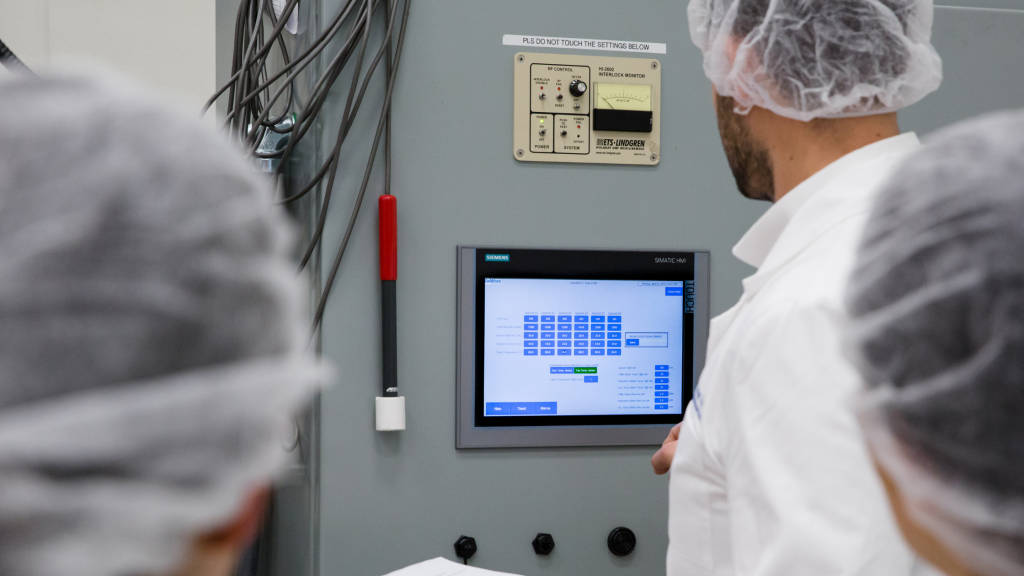
How does this support scalable food processing?
Co-manufacturing supports scalable food processing because production volumes can increase alongside market demand without requiring immediate investments in facilities or equipment.
As companies grow, they can expand production through existing partners, add new manufacturing relationships, or transition to their own production capabilities when appropriate.
This flexibility creates a practical pathway from innovation to full-scale commercialization.
What does this mean for product commercialization?
Product commercialization becomes more accessible when brands can leverage experienced manufacturing partners instead of building production capabilities from scratch.
Contract manufacturing allows companies to:
- Enter the market faster
- Preserve capital
- Reduce operational complexity
- Focus on brand growth
- Scale production more efficiently
For many innovators, this creates a more predictable and sustainable growth strategy.
How does this compare with other manufacturing approaches?
Compared with building and operating a dedicated manufacturing facility, contract manufacturing requires significantly less upfront investment and offers greater flexibility.
While owning production equipment may provide additional control, co-manufacturing allows companies to access established production expertise and infrastructure without assuming the associated operational burden.
For brands focused on growth, innovation, and commercialization, co-manufacturing often represents an efficient path to market.
Why is this relevant for food brands?
Food companies face increasing pressure to innovate quickly while managing costs and operational risk.
Co-manufacturing provides a practical solution by combining advanced processing technologies, manufacturing expertise, and scalable production capacity under a flexible business model.
For brands exploring REV™ technology, contract manufacturing can serve as an effective bridge between product development and commercial success.
Conclusion
Contract manufacturing and co-manufacturing are more than production solutions. They are strategic tools that help food brands commercialize products faster, reduce risk, and scale efficiently.
By leveraging experienced manufacturing partners and innovative processing technologies, companies can focus on building their brand while accessing the production capabilities needed to grow. For many food innovators, co-manufacturing represents the most practical path from concept to commercial success.
FAQ
What is contract manufacturing?
Contract manufacturing is when a third-party company produces products on behalf of a brand owner using its equipment, facilities, and expertise.
What is co-manufacturing?
Co-manufacturing is a collaborative production arrangement where a manufacturing partner helps produce products for a brand while maintaining agreed quality and production standards.
Why use a contract manufacturer?
Contract manufacturers help reduce capital investment, accelerate commercialization, and provide access to specialized production capabilities.
How does EnWave support commercialization?
EnWave helps companies develop products using REV™ technology and connects them with manufacturing partners capable of commercial production.
Is co-manufacturing only for startups?
No. Startups, emerging brands, and established food companies all use co-manufacturing to improve flexibility, optimize resources, and expand production capacity.
Can co-manufacturing support international growth?
Yes. Manufacturing partnerships can help brands scale production into new regions and markets while maintaining product consistency and quality.
Further reading
CFIN Building the Factory of the Future: How Canadian Food Manufacturing Tech Is Scaling
https://www.cfin-rcia.ca/blogs/community-manager/2026/03/04/program-impact-food-manufacturing-tech
Flash Stock Sentinel EnWave Corporation Research Report
https://flash.stocksentinel.ai/research/ENW.V
EnWave’s Co-manufacturing Solutions