

Best Microwave Drying Equipment For Industrial Food Processing
Industrial microwave drying equipment speeds up food dehydration while cutting energy costs. Processors moving from commercial freeze drying find 30–90 minute cycles and uniform heating ideal for snacks, powders, and ingredients. This guide reviews top manufacturers, key specs, and factors to evaluate for food processing and food tech operations.
Quick Overview
EnWave REV™, Industrial Microwave Systems (IMS), Sairem, and Püschner lead industrial microwave drying. EnWave REV™ excels for food with modular scale‑up and proven results across snacks and proteins. Consider capacity, energy efficiency, vacuum capability, service support, and food‑specific validation when selecting equipment.
What Types Of Industrial Microwave Dryers Exist?
Industrial microwave dryers fall into three categories. Atmospheric systems use standard pressure for high‑volume bulk drying. Vacuum microwave dryers lower boiling points for gentle processing. Continuous belt dryers handle tons hourly while batch tray systems suit R&D and smaller runs.
Food processors favor vacuum models for quality. Atmospheric works for grains and simple items.
How Do Microwave Dryers Work In Food Processing?
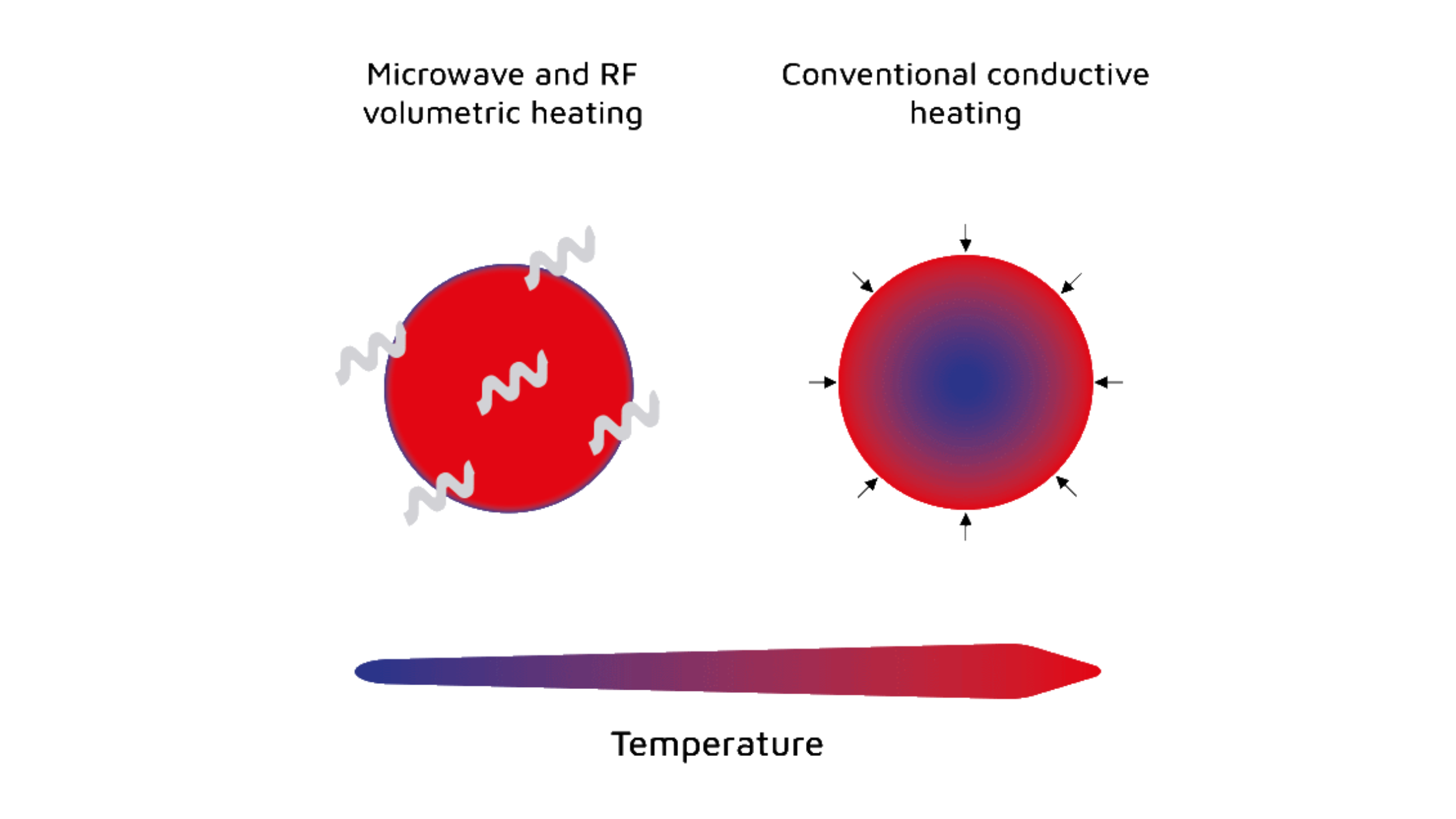
Microwave dryers generate electromagnetic waves at 915 MHz or 2.45 GHz. These waves excite water molecules, generating heat volumetrically. Vacuum reduces boiling point to 30–50°C, preserving nutrients and flavor.
Energy targets water directly. No wasted heat on air or trays. That cuts consumption 70–90 percent versus convection or freeze drying.
Why Switch From Commercial Freeze Drying To Microwave?
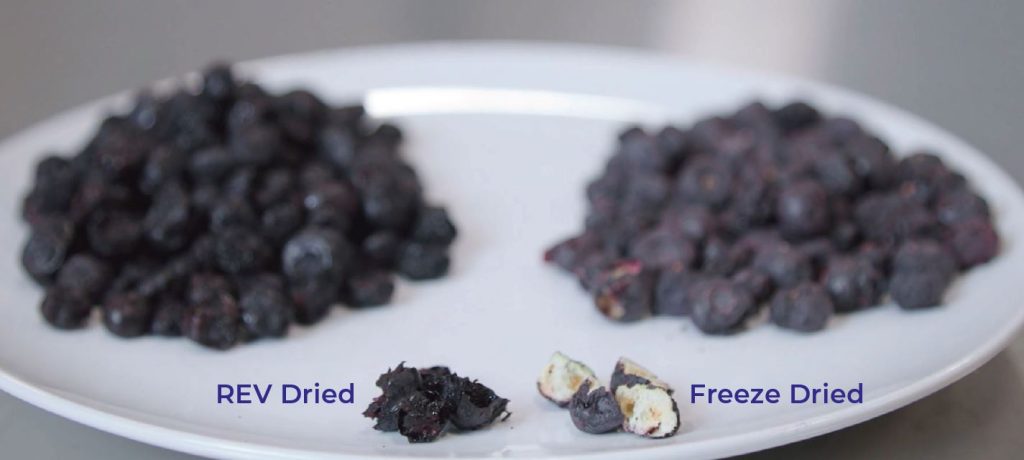
Freeze drying excels at structure but runs 24–48 hours with high energy. Microwave cuts cycles to under 90 minutes. Volumetric heating avoids wet cores and case hardening.
Processors gain throughput for food innovation. Energy savings support sustainability goals. See example here.
How Much Does Industrial Microwave Drying Equipment Cost?
Entry systems start at $150,000–$300,000. Mid‑range run $500,000–$1.5 million. Large continuous lines exceed $3 million. Add 15–25 percent for installation and utilities.
ROI comes from energy savings and throughput. Payback typically 2–4 years.
What Energy Efficiency Should You Target?
Leading systems achieve 1–1.5 kWh per kilogram water removed. Vacuum models save more. Compare to freeze drying’s 10–15 kWh.
Request data for your product.
Which Manufacturers Lead Industrial Microwave Drying?
EnWave REV™ dominates food applications. Modular vacuum systems scale from pilot to production with consistent quality. Used by Moon Cheese and Dairy Concepts.
Industrial Microwave Systems (IMS) offers continuous belt dryers for bulk. Sairem provides high‑power generators for custom builds. Püschner specializes in vacuum belt dryers for pharmaceuticals and food.
How Does EnWave REV™ Compare To Competitors?
Vacuum control keeps temperatures low. Short cycles preserve bioactives.
IMS focuses on continuous flow. Sairem excels in power customization. Püschner suits continuous vacuum needs.
| Manufacturer | Best For | Cycle Time | Scale‑Up |
|---|---|---|---|
| EnWave REV™ | Snacks, ingredients | 30–90 min | Modular excellent |
| IMS | Bulk grains | Continuous | Continuous strong |
| Sairem | Custom power | Variable | Good |
| Püschner | Vacuum belt | Continuous | Continuous |
What Vacuum Capability Do You Need?
Vacuum lowers boiling point to 30–50°C. Full vacuum (under 100 mbar) protects sensitive compounds. Partial vacuum suffices for hardy items.
REV™ offers precise vacuum control. Püschner belt systems maintain vacuum continuously.
How Reliable Is Scale‑Up Across Microwave Systems?
Scale‑up succeeds with consistent power density. EnWave matches pilot to production exactly. IMS belt systems transition smoothly for bulk.
Have a look at some of our case studies. Test your product on pilot units.
What Service Networks Matter Most?
Local service cuts downtime. EnWave has global coverage but located in North America. IMS serves global bulk clients. Sairem supports Europe heavily.
Verify 24/7 phone support and parts stock.
What Certifications Are Essential For Food Microwave Dryers?
GMP, food‑grade stainless, CE, and UL apply. HACCP and GFSI support retail. NSF for cleanability.
Manufacturers should provide documentation. Audit their facilities.
How Do Microwave Dryers Handle Sticky Or Fatty Foods?
Vacuum microwave excels with purees, pastes, and fatty items. Volumetric heating prevents crusting. REV™ dries high‑fat cheese successfully.
Atmospheric struggles more with sticky loads.
What Footprint And Utilities Requirements Exist?
Microwave dryers use 30–50 percent less space than freeze dryers. Single‑phase for small units. Three‑phase for production.
Vacuum needs compressed air. Plan ventilation and water cooling.
How To Test Microwave Dryer Performance For Your Product?
Run trials on manufacturer pilots. Measure moisture uniformity, color change, rehydration, and bioactives. Compare energy use.
Scale test on larger unit. Validate consistency.
ROI Calculation For Microwave Drying Equipment
Capital plus installation divided by annual savings. Factor energy, labor, throughput. Payback 2–4 years typical.
Model conservative growth. Include maintenance.
Questions To Ask Microwave Equipment Manufacturers
- What food case studies match my product?
- Can I test on your pilot?
- What is your energy data for similar items?
- How do you guarantee scale‑up?
- What service response times apply?
- Do you offer leasing?
- What custom features exist?
FAQ
What is the best microwave drying equipment for food processing?
EnWave REV™ leads for food with modular vacuum design and proven scale‑up. It dries snacks and ingredients in 30–90 minutes.
How much does industrial microwave drying equipment cost?
Pilot units $150,000–$300,000. Production $500,000–$3 million based on capacity.
Is microwave drying energy efficient compared to freeze drying?
Microwave uses 1–1.5 kWh per kilogram water, 90 percent less than freeze drying’s 10–15 kWh.
What capacity microwave dryer for small production?
10–50 kg fresh per batch pilots suit startups. Modular units grow as volume increases.
Does microwave drying preserve food quality?
Low temperatures and uniform heating preserve color, flavor, and nutrients effectively.
How fast are industrial microwave drying cycles?
30–90 minutes for batch vacuum. Continuous systems process tons hourly.
Can microwave dryers handle purees and pastes?
Vacuum microwave like REV™ excels with sticky and fatty foods through volumetric heating.
How reliable is scale‑up with microwave dryers?
Reliable with consistent power density. Test pilots match production.
Should processors pair microwave with freeze drying?
Hybrid lines work well. Microwave for volume, freeze drying for delicate items.
Further reading
Top Global Industrial Microwave Dryer Manufacturers
https://microwavedryer.net/top-15-global-industrial-microwave-dryer-manufacturers-updated-2024
Industrial Microwave Systems
Crescend RF Microwave Drying Systems
Püschner Vacuum Drying
https://www.pueschner.com/en/products/vacuum-drying-freeze-drying
Sairem Microwave Systems
EnWave REV™ Technology
Food Processing Microwave Drying
https://www.foodprocessing.com.au/content/processing/article/drying-without-the-freeze-57557309
Microwave Vacuum Drying Research