

Best Drying Method For Natural Active Ingredients
Vacuum microwave dehydration excels for natural active ingredients by using low temperatures, short cycles, and uniform heating to preserve bioactives like polyphenols, vitamins, and enzymes. It provides speed and quality that outpace traditional air drying while rivaling freeze drying retention for many plant extracts. Select the method based on material type, production scale, and final product needs.
Quick Overview
Air drying works simply but slowly with nutrient loss. Spray drying suits powders quickly but heat harms actives. Freeze drying preserves well but takes long and costs more. Vacuum microwave delivers short cycles with strong retention. REV™ powers commercial use for herbs, fruits, and nutraceuticals in food processing and product innovation.
What Defines Natural Active Ingredients In Drying?
Natural actives cover polyphenols, flavonoids, vitamins, essential oils from plants, herbs, fruits. They react to heat, oxygen, light. Drying needs to hold potency for supplements or foods.
Different methods offer varying protection. Gentler options keep more intact.
Why Avoid High Heat For Active Ingredients?
High heat breaks down vitamins C, E, enzymes. Oxidation hits antioxidants hard. Longer exposure means more loss.
Low-temp vacuum approaches safeguard better.
How Does Air Drying Perform On Actives?
Air drying costs little and uses basic setup. Fans push hot air over trays for hours or days. Heat oxidizes outer layers first.
Polyphenol retention sits at 50–70 percent. Uneven results raise mold risks.
What Makes Spray Drying Popular Yet Limited?
Spray drying turns liquid into powder fast by atomizing into a hot chamber. It fits liquid extracts well.
Inlet air temperatures damage heat-sensitive actives. Vitamin retention reaches 60–80 percent.
When Is Freeze Drying The Gold Standard?
Freeze drying freezes material then sublimes ice under vacuum. No liquid phase cuts damage. Retention hits 90–97 percent for most actives.
Cycles run 24–48 hours. Energy demands stay high. Product turns fragile.
How Vacuum Microwave Dehydration Protects Actives?
Vacuum lowers boiling points. Microwaves heat water evenly throughout. Short time cuts exposure.
Retention reaches 85–95 percent, close to freeze drying. Low oxygen limits oxidation.
Why Volumetric Heating Benefits Sensitive Materials?
Heat reaches deep inside fast. No wet centers or hard crusts form. Actives distribute evenly.
Surface-only drying overcooks edges while centers stay raw.
What Vacuum Levels Optimize Active Preservation?
Levels around 50–200 mbar work best. Control avoids pressure swings. REV™ adjusts in real time.
Lower vacuum stays gentle but slows vapor escape.
How Short Cycles Reduce Degradation?
Cycles finish in 30–90 minutes instead of days. Total heat exposure drops. Volatiles stay put.
This fits fast product development paces.
Comparison Table For Active Retention
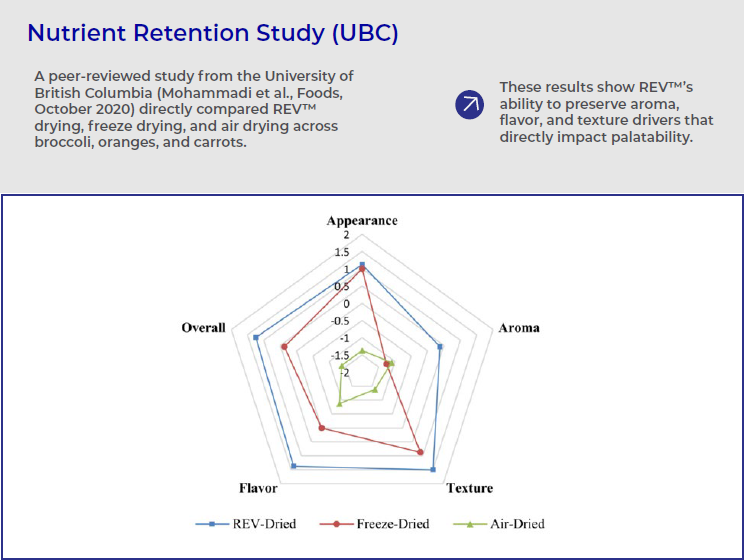
When Vacuum Microwave Beats Freeze Drying?
High-volume crisps or powders benefit most. Quick iteration aids food innovation. Lower upfront costs help.
Freeze drying suits rehydratable pharma needs.
Real Cases With Natural Actives
Berry processors keep anthocyanins high with REV™. Herb drying holds essential oils. Probiotics survive well.
Trials beat air drying hands down.
Scale‑Up Considerations For Actives
Modular machines keep lab results at full production. Retention holds steady for tons per day.
Pilot runs confirm predictions.
Facility And Cost Factors
Smaller footprint saves space. Utility bills drop. Return comes quicker.
Freeze setups need more room and investment.
Steps To Choose Drying For Actives
- List key bioactives to protect.
- Run trials on methods.
- Check retention levels.
- Pilot at scale.
- Review full costs.
How Does Vacuum Microwave Fit Commercial Food Drying?
Commercial food drying demands speed and consistency. Vacuum microwave handles batches from lab to tons. It fits product development timelines tight.
Food tech teams value the reliability. No long waits between tests.
Why Consider Microwave Drying Equipment For Solids?
Many actives come in wet solids like fruits or herbs. Spray drying skips solids. Vacuum microwave processes them direct.
This cuts preprocessing steps. Saves time in food processing.
What Role Does Drying Play In Food Dehydration Innovation?
Food dehydration shapes texture and shelf life. Right method boosts natural flavors. Vacuum microwave crisps without sogginess.
Innovation thrives on quick trials. Teams refine faster.
How Does Drying Technology Affect Product Innovation?
Slow drying stalls ideas. Fast methods let creators test more. Vacuum microwave supports bold food innovation.
Nutraceutical developers iterate recipes daily.
Common Challenges In Drying Natural Actives
Uneven drying shrinks potency. Scale changes alter results. High costs limit trials.
Vacuum microwave tackles these head on.
Why Test Multiple Drying Methods Early?
Each material reacts different. Berries crisp well in microwave. Leafy herbs need freeze trials.
Side-by-side tests pick winners.
What Equipment Scales Best For Food Tech?
Modular drying grows with demand. Power matches tray size exactly. No revalidation needed.
REV™ units stack for capacity.
How To Measure Active Retention Accurately?
Use HPLC for polyphenols. Antioxidant assays for total capacity. Compare pre and post drying.
Standard methods build trust.
Drying Methods For Specific Active Types
Polyphenols in berries. Vacuum microwave retains color and bite.
Vitamins in veggies. Short cycles hold water-solubles.
Enzymes in extracts. Low oxygen preserves activity.
Essential oils in herbs. Volumetric heat traps volatiles.
Integration With Food Processing Lines
Vacuum microwave slots inline after washing. Continuous feed possible. Minimal handling.
Fits modern food processing flows.
Cost Breakdown Across Drying Options
Air drying low equipment but labor heavy. Spray needs extract prep. Freeze high capex and ops.
Vacuum microwave balances upfront and running.
Environmental Impact Of Drying Choices
Water vapor management matters. Energy ties to carbon. Efficient methods cut waste.
Vacuum microwave recycles heat internally.
Future Directions In Drying Technology
Hybrid systems combine strengths. AI controls parameters. Microwave leads commercial shifts.
Food tech eyes efficiency gains.
Regulatory Notes For Active Drying
Claims need lab proof. Shelf life tests post drying. GMP guides equipment choice.
Consistent methods ease compliance.
Team Training For New Drying Tech
Hands-on pilots build skills. Data logs track runs. Short cycles mean more practice.
Teams master fast.
Maintenance Tips For Microwave Dryers
Clean trays between runs. Check vacuum seals. Calibrate power yearly.
Uptime stays high.
Troubleshooting Common Drying Issues
Wet spots mean poor vacuum. Uneven color signals overheat. Adjust parameters step by step.
Records guide fixes.
Pairing Drying With Packaging
Crisps need moisture barriers. Powders want oxygen control. Test combos early.
Shelf life doubles.
Global Trends In Active Ingredient Markets
Demand rises for clean label. Natural drying fits. Asia leads herb exports.
Vacuum microwave meets volume.
Sourcing Quality Starting Materials
Fresh harvest maximizes actives. Test incoming quality. Drying amplifies good inputs.
Partners matter.
Lab Setup For Drying Trials
Small REV™ pilots mimic production. Measure before and after. Log every variable.
Data drives decisions.
Collaborating With Drying Experts
Share goals early. Run joint pilots. Scale with support.
Partnerships cut risks.
Why Natural Actives Drive Food Innovation?
Consumers seek proven benefits. Potent drying enables claims. Market grows yearly.
Right tech captures value.
Conclusion
Vacuum microwave dehydration offers the best balance for natural active ingredients. It preserves bioactives through short, even cycles while speeding product development and commercial food drying. Teams working in food processing and food tech find it reliable for innovation. Test it against your needs for clearest results.
FAQ
What is the best drying method for natural active ingredients?
Vacuum microwave dehydration preserves 85–95 percent of bioactives with short cycles.
How does vacuum microwave drying compare to freeze drying?
Similar retention but much faster cycles and lower costs for commercial scale.
Why choose vacuum microwave over air drying?
Better retention, even drying, no mold risks from uneven moisture.
Can vacuum microwave handle solid foods?
Yes, direct drying of fruits, herbs, veggies for crisps or powders.
What materials work best with microwave drying equipment?
Polyphenols, vitamins, enzymes, essential oils in plants and extracts.
How does drying affect food dehydration outcomes?
Sets texture, shelf life, flavor potency for final products.
Is vacuum microwave suitable for product innovation?
Fast iteration speeds recipe testing and market entry.
What retention levels expect from freeze drying?
90–97 percent for most actives but long process times.
Why volumetric heating in drying technology?
Even heat prevents overcooking surfaces or wet cores.
Scale-up reliable for commercial food drying?
Modular design keeps lab results at production volumes.
Further reading
EnWave Microwave Dehydration Food Industry
Food Drying Methods Comparison
https://www.intechopen.com/chapters/84932
Microwave Processing Food Review
https://www.sciencedirect.com/science/article/abs/pii/S0924224417302200
Microwave Dehydrator Guide
https://www.foodmachineryint.com/everything-you-need-to-know-about-microwave-dehydrator-in-2024
EnWave REV Technology
EnWave Beyond Conventional Drying
Merck EnWave Research
Bakers Journal Food Dehydration
Microwave Drying ScienceDirect
https://www.sciencedirect.com/topics/agricultural-and-biological-sciences/microwave-drying
EnWave Popular Food Drying Processes