

How Does Vacuum Microwave Drying Differ From Other Drying Methods?
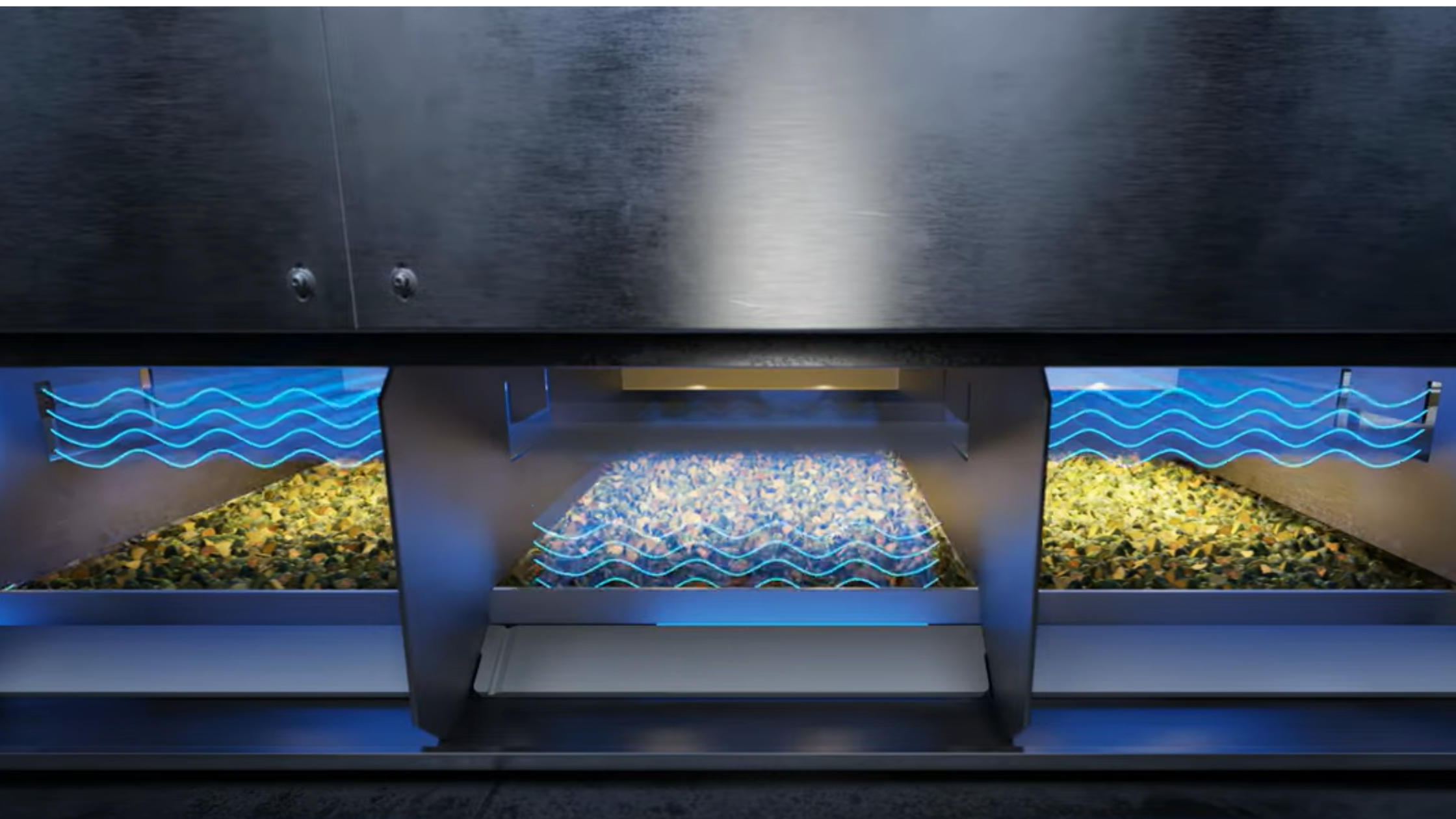
Vacuum microwave drying heats water molecules volumetrically under low pressure for rapid moisture removal. It stands apart from air drying, spray drying, and commercial freeze drying by combining speed, low temperature, and even drying. Food processors gain 30–90 minute cycles and 90 percent energy savings for commercial food drying.
Quick Overview
Vacuum microwave drying uses microwaves and vacuum to boil water at 30–50°C without surface scorching. Air drying takes days with high heat. Spray drying suits liquids but destroys structure. Freeze drying preserves quality slowly over 24–48 hours. Vacuum microwave bridges speed and quality for food innovation.
What Is Vacuum Microwave Drying?
Vacuum microwave drying lowers chamber pressure so water boils at reduced temperatures. Microwaves penetrate food, vibrating water molecules to generate heat throughout. Vapor escapes quickly while product stays cool.
The process suits fruits, vegetables, meats, and snacks. Low oxygen limits oxidation for better flavor and color.
How Does Vacuum Microwave Differ From Hot Air Drying?
Hot air drying blows heated air over surfaces for slow evaporation. It takes 8–24 hours with temperatures 60–80°C. Surface dries first, forming case hardened barriers that trap interior moisture.
Vacuum microwave dries uniformly in 30–90 minutes at lower temperatures. No crust forms. Energy targets water directly.
Why Is Vacuum Microwave Faster Than Spray Drying?
Spray drying atomizes liquids into hot air for instant evaporation. It processes 1–10 tons hourly but suits solutions, not solids. Structure collapses, limiting to powders.
Vacuum microwave handles chunks and purees with intact texture. Batch flexibility aids product development.
What Sets Vacuum Microwave Apart From Commercial Freeze Drying?
Freeze drying freezes then sublimes ice under vacuum near triple point. Cycles run 24–48 hours with 10–15 kWh per kilogram water. Excellent structure preservation but high cost.
Vacuum microwave skips freezing. Evaporation at low heat uses 1–1.5 kWh. Faster throughput for high volume.
How Does Vacuum Microwave Control Product Temperature?
Vacuum drops boiling point to 30°C. Microwaves heat only water, keeping solids cool. Power pulsing prevents overheating.
Sensors adjust microwave output.
What Texture Outcomes Come From Vacuum Microwave Drying?
Even drying yields crisp fruits, chewy meats, or powdery fines. No shrinkage or cracking. Adjustable power tunes from airy to dense.
Freeze drying gives porous sponge. Air drying toughens surfaces.
Why Does Vacuum Microwave Save So Much Energy?
Heat goes directly to water. No losses heating air or shelves. Vacuum efficiency boosts vapor removal.
Studies show 20 percent savings versus convection or freeze drying.
How Does Vacuum Microwave Preserve Nutrients Better?
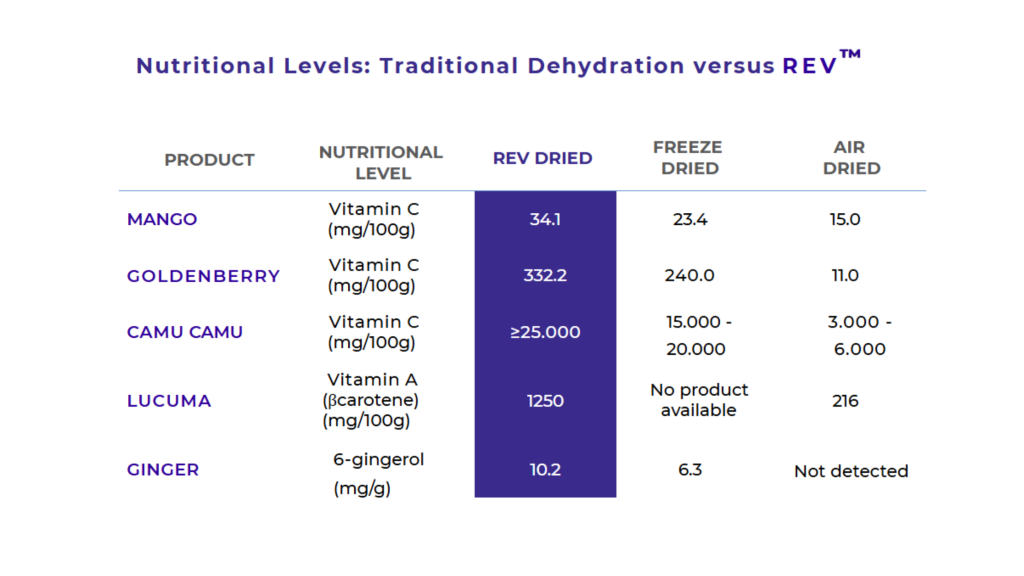
Low temperatures and short exposure limit degradation. Oxygen scarcity under vacuum cuts oxidation. Volatiles stay trapped.
Bioactive retention matches or exceeds freeze drying for many items.
What Challenges Does Vacuum Microwave Solve In Food Processing?
Case hardening, wet cores, and long cycles plague other methods. Vacuum microwave dries uniformly without crusts. Short times speed product innovation.
High‑fat or sticky foods process cleanly.
How Does Vacuum Microwave Support Scale‑Up?
Modular units match power density from pilot to production. Recipes transfer directly. Continuous versions handle tons.
No reformulation needed.
What Footprint And Installation Needs Apply?
Vacuum microwave units occupy 30 percent less space than freeze dryers. Single‑phase power for small. Three‑phase for large.
Compressed air and water cooling required.
Comparison Of Vacuum Microwave Vs Other Dryers
Steps To Implement Vacuum Microwave Drying
- Test product on pilot unit.
- Optimize power, vacuum, time.
- Scale to production module.
- Validate quality metrics.
- Integrate into line.
Why Vacuum Microwave Fits Product Innovation
Daily iterations possible. Texture control expands categories. Clean label preserved.
Brands develop snacks, ingredients fast.
FAQ
What is vacuum microwave drying?
Vacuum microwave drying uses microwaves under low pressure to heat water volumetrically for rapid, even dehydration at low temperatures.
How does vacuum microwave differ from freeze drying?
Vacuum microwave evaporates water in 30–90 minutes without freezing. Freeze drying sublimes ice over 24–48 hours.
Is vacuum microwave energy efficient?
Yes. It uses 1–1.5 kWh per kilogram water, less than air or freeze drying.
What foods work best with vacuum microwave?
Fruits, vegetables, meats, snacks, purees. Handles fat and sugar well without case hardening.
Does vacuum microwave preserve flavor?
Low oxygen and short time retain volatiles. Flavor intensity often exceeds other methods.
How fast are vacuum microwave cycles?
30–90 minutes for batch. Continuous systems process tons hourly.
Can vacuum microwave scale for commercial use?
Modular designs scale seamlessly. Power density matches pilot to production.
Why no case hardening in vacuum microwave?
Volumetric heating dries interior and surface simultaneously.
How does vacuum microwave compare to spray drying?
Vacuum microwave preserves structure for solids. Spray suits liquids to powder only.
Further reading
EnWave Freeze Drying Vs Microwave Drying
PMC Microwave Vacuum Drying Study
https://pmc.ncbi.nlm.nih.gov/articles/PMC7814865
ScienceDirect Microwave Vacuum Drying Alternatives
https://www.sciencedirect.com/science/article/abs/pii/S1466856421001715
Food Processing Drying Without The Freeze
https://www.foodprocessing.com.au/content/processing/article/drying-without-the-freeze-57557309
Püschner Microwave Dryers
https://www.pueschner.com/en/products/microwave-technology
Top Industrial Microwave Dryer Manufacturers
https://microwavedryer.net/top-15-global-industrial-microwave-dryer-manufacturers-updated-2024