
Is dehydrating the same as freeze drying?
Why Your Snack’s Texture and Flavor Depend on How It’s Dried
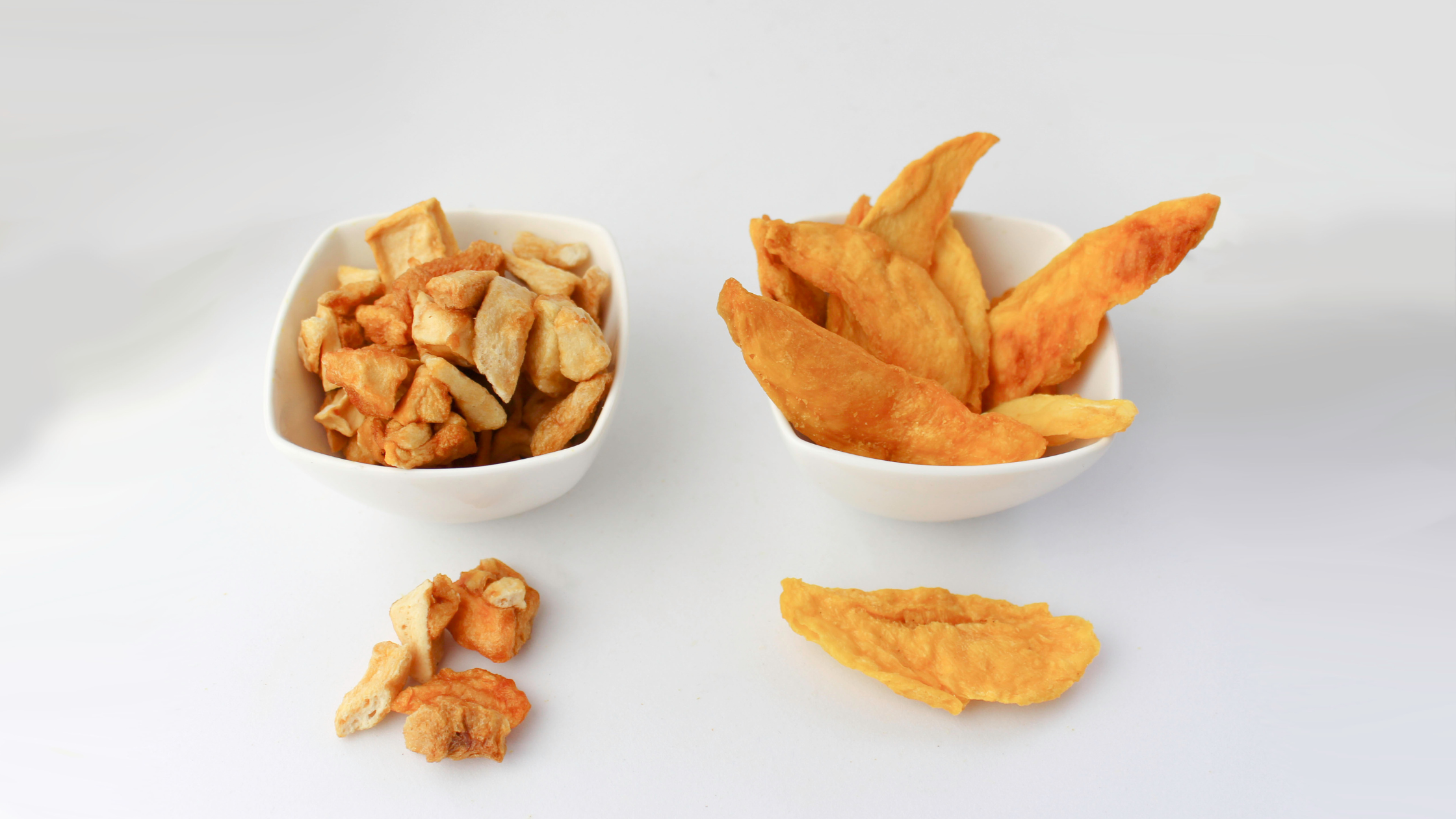
The drying method profoundly influences a snack’s texture and flavor. Conventional methods like freeze drying create unique textures but have limitations in speed and energy use. Enwave’s patented vacuum microwave dehydration raises the bar by delivering superior texture, flavor, and efficiency. This blog explains how subtle differences in drying technologies affect snacks and why Enwave’s solution offers a significant advantage for product innovation in food tech.
How Does Drying Method Affect Snack Texture and Flavor?
The method used to remove moisture shapes a snack’s mouthfeel and taste profile. Drying influences:
- Crunchiness versus chewiness or melt-in-the-mouth softness
- Retention of natural colors and aromas
- Preservation of taste compounds sensitive to heat or oxidation
- Nutrient and bioactive compound stability
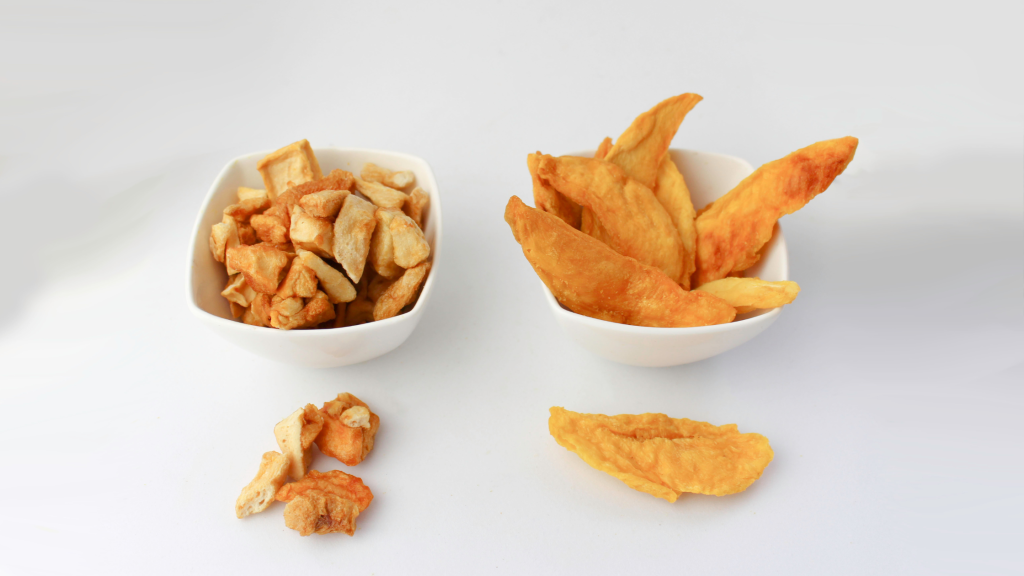
Subtle differences in heat application, drying speed, and pressure contribute to these sensory outcomes. For example, hot air drying may cause case hardening resulting in tough textures, while slower freeze drying preserves delicate structures but can yield dry, porous products.
What Are the Main Differences Between Freeze Drying and Microwave Dehydration?
Freeze drying uses sublimation to remove water while preserving shape and nutrients but it requires freezing and long processing times, often days. Microwave dehydration uses microwave energy combined with vacuum to evaporate moisture more rapidly at low temperatures.
Key distinctions include:
- Drying Time: Freeze drying takes hours to days; microwave dehydration takes minutes to hours.
- Energy Use: Microwave drying is more energy-efficient due to faster processing with less heat lost.
- Texture: Freeze drying gives airy, porous textures; microwave dehydration delivers crisp or chewy textures with better mouthfeel control.
- Flavor and Nutrients: Microwave dehydration preserves bioactives and flavor compounds better due to shorter exposure to heat.
- Product Versatility: Microwave drying suits a wider range of textures and product types.
How Does Microwave Dehydration Produce Better Texture and Flavor?
Microwave vacuum drying penetrates food volumetrically, heating water molecules inside the product, causing rapid yet gentle moisture evaporation under low pressure. This process:
- Minimizes cellular damage to preserve original texture
- Maintains vibrant natural colors and aromas
- Prevents excessive protein denaturation and nutrient degradation
- Enables customization of snack texture: crisp, chewy, or tender
- Shortens drying times improving freshness in the final product.
What Are the Limitations of Conventional Drying Methods for High-Quality Snacks?
Traditional drying methods often expose products to high heat for long durations, which can:
- Cause uneven drying and case hardening
- Require high energy, increasing costs and environmental impact
- Reduce retention of vitamins, antioxidants, and flavor compounds
- Limit the ability to craft textures beyond basic crunchy or leathery.
Why Is Enwave’s Vacuum Microwave Drying Technology a Game-Changer for Food Innovation?
Enwave’s technology combines microwave energy and vacuum conditions to reduce drying times significantly while preserving product integrity. Benefits include:
- Speeding drying from days to minutes compared to freeze drying
- Enhanced retention of nutrient density, colors, and flavors
- Ability to scale from craft to industrial production efficiently
- Flexible control over final moisture and textural properties
- Lower operational energy consumption and carbon footprint.
How Does the Drying Method Impact Product Development and Commercial Food Processing?
Selecting the drying method directly influences product feasibility, cost, and consumer appeal. Microwave drying meets the needs of modern food innovation by:
- Enabling faster iteration cycles in product development
- Supporting clean-label and nutrient-rich snack trends
- Delivering consistent batch quality ideal for commercial scaling
- Offering new product textures for differentiation in competitive markets.
Frequently Asked Questions About Drying Methods and Snack Quality
What is the main advantage of microwave dehydration over freeze drying?
Microwave dehydration is much faster and more energy-efficient while maintaining or improving nutritional and sensory quality.
Can microwave drying produce crunchy and chewy snacks?
Yes, the technology allows precise moisture control, enabling a range of textures from crisp to tender.
Does drying method affect flavor retention?
Absolutely. Faster, gentler drying reduces flavor loss and oxidation compared to prolonged heat exposure.
Is microwave dehydration suitable for all types of snacks?
Yes, it works well for fruits, vegetables, meat snacks, dairy, and specialty formats.
Summary
Textural and flavor differences in dried snacks depend greatly on drying method. Enwave’s vacuum microwave dehydration offers superior performance over conventional and freeze-drying methods, providing better texture, flavor, nutrient retention, and efficiency. For brands seeking innovation in product development and commercial drying technology, it is a powerful alternative that supports faster, cleaner, and more enjoyable snacks.
Further Reading
American Chemical Society, Effect of Drying Methods on Texture:
https://pubs.acs.org/doi/10.1021/acsfoodscitech.4c00561
Walsh Medical Media, Innovative Microwave Drying Techniques:
NCBI, Effects of Drying Methods on Food:
https://pmc.ncbi.nlm.nih.gov/articles/PMC11083506
Enwave Corporation, What is REV? Vacuum Microwave Dehydration Technology:
Enwave Corporation, How Is Microwave Dehydration Changing Food Industry?: