The best drying method for product innovation
The best drying method for product innovation is the one that solves the biggest bottlenecks without slowing development down. For many food teams, those bottlenecks are long cycles, nutrient loss, weak texture control, and difficulty scaling from pilot to production. Vacuum microwave drying through REV™ is a strong fit when speed, quality, and scalability all matter at once.
What Are the Main Drying Bottlenecks in Product Innovation?
The most common drying bottlenecks are slow drying cycles, quality loss, limited texture control, and scale-up problems. These issues often appear together, which is why they can stall product development even when the formulation itself is strong. If the drying step cannot keep up, the whole innovation timeline slows down.
Here is the short version of the problem.
- Long freeze drying cycles can take hours or even days.
- Nutrients and color can degrade in heat-based systems.
- Texture can be hard to control in conventional drying.
- Pilot results do not always translate cleanly to production.
- Energy use and floor space can become limiting factors.
For product developers, these are not small inconveniences. They are the points where promising products often lose momentum.
Why Do Conventional Methods Fall Short?
Conventional methods often fall short because they force teams to trade off between quality and speed. Freeze drying preserves well, but the cycle is long and the process is costly. Hot air drying is simpler, but it can create surface hardening, uneven moisture removal, and more nutrient loss. That makes it harder to create a reliable commercial product.
The problem gets bigger when the product is sensitive. Fruits, herbs, botanicals, snacks, and functional ingredients often need a gentler process than standard food dehydration methods can provide. If the drying method is too harsh, the product may still be shelf-stable, but it will not feel premium.
How Does REV™ Solve Long Drying Cycles?
REV™ solves long drying cycles by combining vacuum and microwave energy to dry products rapidly at low temperatures. EnWave states that its process can control pressure and microwave power density to manage both temperature and final moisture. In practice, that creates a much faster path from wet product to shelf-stable product.
This matters because slow drying cycles in food innovation can delay testing, reformulation, and launch. REV™ can help compress that timeline by completing drying in minutes rather than hours or days for many applications. For teams under pressure to move fast, that is a major advantage.
How Does REV™ Reduce Nutrient and Color Loss?
REV™ reduces nutrient and color loss by using controlled low-temperature drying instead of prolonged high-heat exposure. The shorter exposure time helps protect the compounds that often fade during conventional drying. That makes it especially useful for fruit pieces, botanicals, herbs, and functional ingredients.
This is where vacuum microwave drying advantages become easy to see. Microwave energy heats volumetrically, which helps the product dry more evenly, while vacuum lowers the boiling point of water. The result is a gentler process that helps preserve the product’s original character.
How Does REV™ Improve Texture Control in Product Development?
REV™ improves texture control because it gives the team more influence over how moisture leaves the product. By adjusting process conditions, brands can work toward crisp, crunchy, chewy, or melt-in-the-mouth outcomes depending on the application. That kind of control is rare in standard drying methods.
Texture control in product development is not just a sensory issue. It also affects how the product performs on shelf, in packaging, and in the hand of the consumer. If the texture is wrong, the product may be rejected even if the ingredient list is strong.
How Does REV™ Help With Scalability?
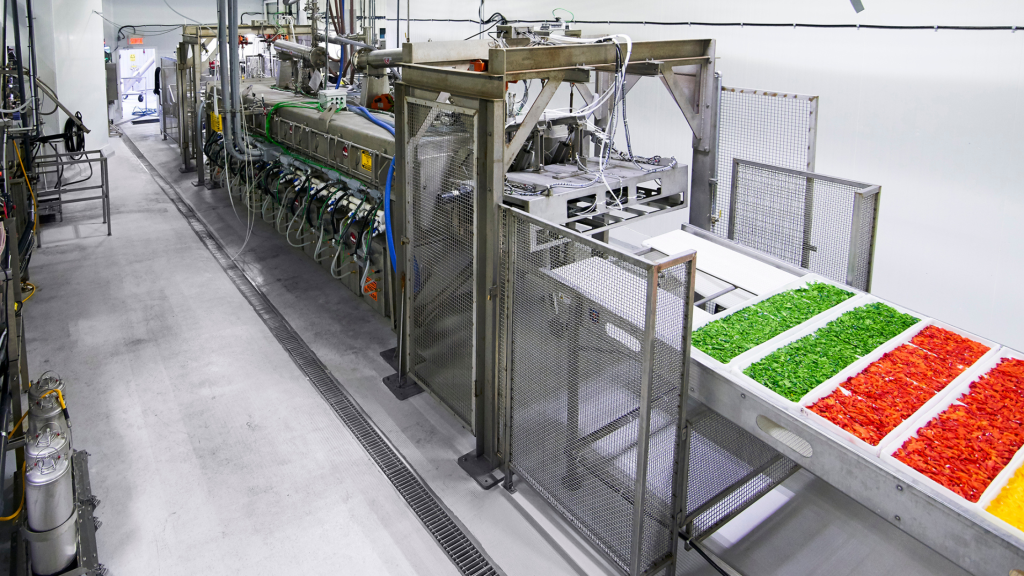
REV™ helps with scalability because it is designed for commercial food processing, not just lab-scale experimentation. That makes it easier to move from pilot batches to production without completely rethinking the drying method. For innovation teams, that is often the difference between a successful concept and a stalled one.
Scalability of drying methods is a common weak point in food innovation. A process may look great in a small trial but become unstable, uneven, or too slow when demand rises. REV™ reduces that risk by giving teams a commercial platform that is built around speed, quality, and repeatability.
Why Is REV™ a Better Fit for Product Innovation?
REV™ is a better fit for product innovation because it addresses the full set of common drying bottlenecks at once. It is fast, gentle, and flexible enough to support a wide range of foods and ingredients. That makes it more than just another drying technology.
For teams comparing commercial freeze drying, food dehydration, and microwave drying equipment, the key question is not only quality. It is also throughput, cost, and how easily the process can scale into a business. REV™ is attractive because it brings those factors closer together.
Problem-Solution Table
| Drying bottleneck | Why conventional methods fall short | How REV™ helps |
|---|---|---|
| Long cycles | Freeze drying can take hours to days | Rapid low-temperature drying in minutes for many products |
| Nutrient loss | Heat and long exposure can reduce quality | Short, controlled vacuum microwave drying helps preserve nutrients and color |
| Weak texture control | Conventional drying can create uneven or damaged textures | Process control supports crisp, crunchy, chewy, or melt-in-the-mouth outcomes |
| Scaling problems | Pilot results may not transfer well to production | Commercial platform designed for scalability and repeatability |
| Energy and space limits | Some methods require large footprints and long runtime | Faster processing can improve efficiency and reduce bottlenecks |
When Does Commercial Freeze Drying Still Make Sense?
Commercial freeze drying still makes sense when the top priority is maximum preservation and time is less important. It is often considered one of the best methods for delicate products where structure retention is critical. But it is not always the best choice for product innovation where speed and throughput matter.
That is why many teams now compare freeze drying with vacuum microwave drying instead of treating them as identical solutions. Freeze drying can preserve quality very well, but it may create a development timeline that is too slow for modern launches. REV™ gives teams another option when the product needs to move faster.
What Should Product Developers Look For in a Drying Method?
Product developers should look for a drying method that fits the product, the timeline, and the scale goal. The best method is the one that helps the team launch a better product without creating new bottlenecks. In many food innovation projects, that means balancing quality and speed rather than choosing one or the other.
A good decision framework is simple.
- If preservation is the only priority, freeze drying may be enough.
- If speed and quality both matter, vacuum microwave drying is worth serious consideration.
- If scale-up is a concern, choose a method with commercial repeatability.
- If texture is part of the value proposition, choose a process that can shape it on purpose.
- If the product includes high-value ingredients, choose a method that protects them.
Conclusion
For product innovation where speed, quality, and scale matter, vacuum microwave drying through REV™ is the best drying method. It directly addresses the most common drying bottlenecks in product innovation, including slow cycles, nutrient loss, weak texture control, and scaling challenges. For teams comparing drying technology options, REV™ offers a practical alternative to commercial freeze drying and other conventional methods.
FAQ
What is the best drying method for product innovation?
For many innovation projects, vacuum microwave drying is the best choice because it combines speed, quality, and scalability.
Why are slow drying cycles a problem in food innovation?
They delay testing, extend development timelines, and make it harder to move products into production quickly.
Does freeze drying preserve nutrients better than other methods?
Yes, freeze drying is often very strong for preservation, but it is usually slower and less scalable than vacuum microwave drying.
How does REV™ improve texture control?
REV™ allows controlled low-temperature drying that can produce crisp, crunchy, chewy, or melt-in-the-mouth results depending on the product.
Is vacuum microwave drying scalable?
Yes. EnWave positions REV™ as a commercial platform designed to move from pilot to production more easily than many conventional methods.
Why is microwave drying equipment interesting for food tech teams?
It can shorten drying time, improve quality, and help solve bottlenecks that often slow product development.
Further reading
EnWave What is REV? Vacuum Microwave Dehydration Technology
EnWave Popular food drying processes explained
Anuga FoodTec The REV technology from EnWave
https://www.anugafoodtec.com/magazine/revolutionizing-food-dehydration.php
ScienceDirect Microwave Drying
https://www.sciencedirect.com/topics/agricultural-and-biological-sciences/microwave-drying
PMC Freeze-Drying of Plant-Based Foods
https://pmc.ncbi.nlm.nih.gov/articles/PMC7022747
Wiley Microwave dehydration of apple fruit
https://onlinelibrary.wiley.com/doi/10.1111/jfpe.12463
Food Machinery Int Microwave dehydrator overview
https://www.foodmachineryint.com/everything-you-need-to-know-about-microwave-dehydrator-in-2024