

What Is the Healthiest Way to Dry Food Commercially?
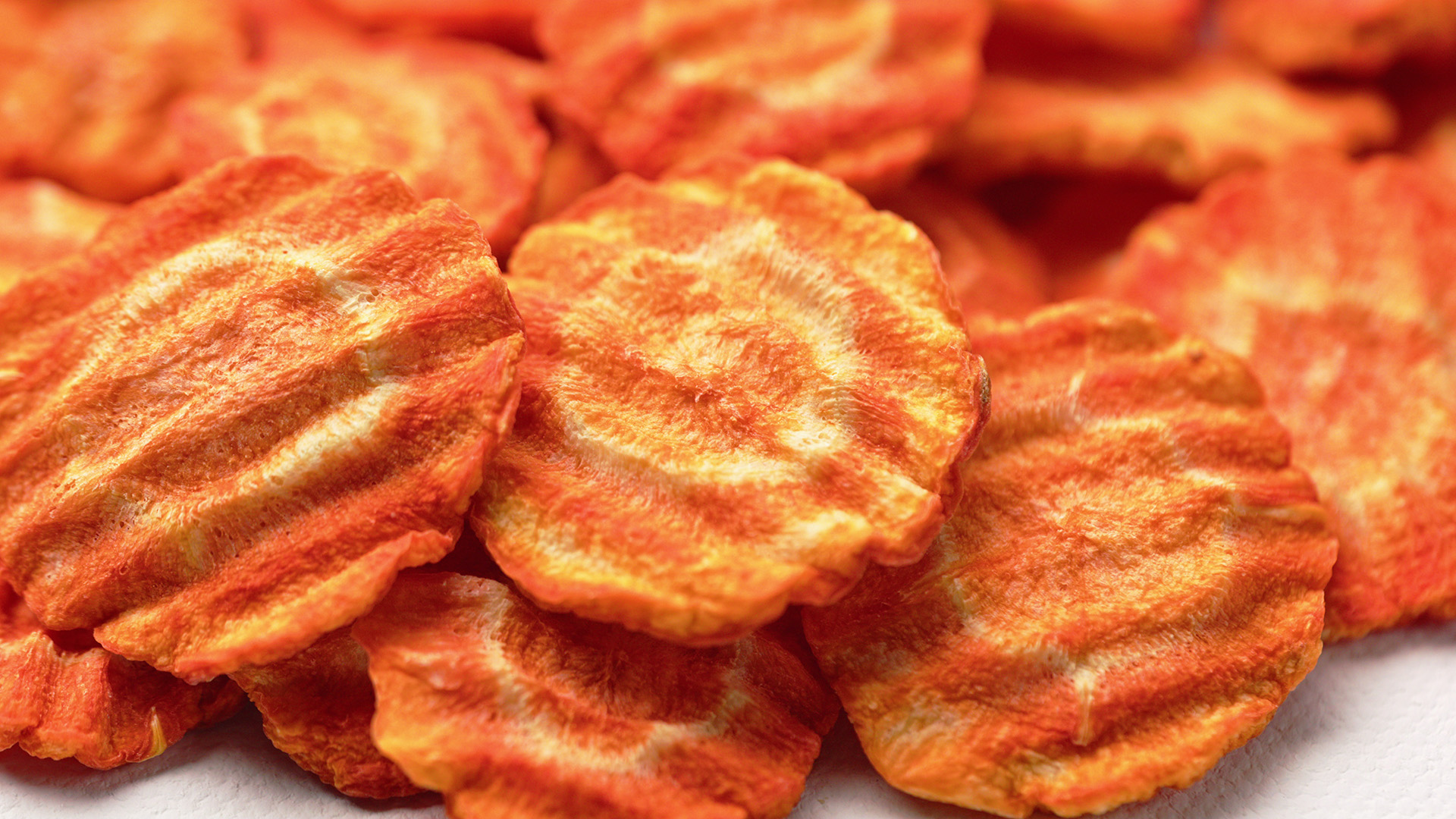
The healthiest commercial drying method depends on the ingredient and the quality profile the manufacturer needs to protect. Nutrient retention matters, but so do bioactive stability, color, flavor, aroma, texture, water activity, additives, energy use, and production cost.
For some products, commercial freeze drying may be the best fit. For others, controlled hot-air, spray, vacuum, or vacuum microwave drying may provide a better balance of quality, scale, and economics. The right question is not “Which drying method is healthiest?” It is “Which method best preserves the qualities that matter for this ingredient and application?”
What does healthy commercial drying mean?
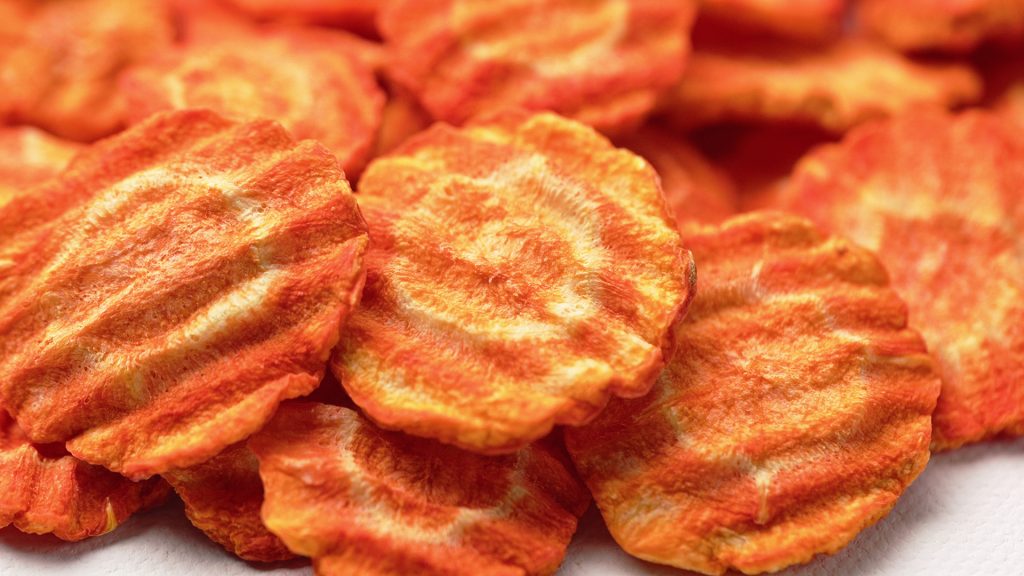
Healthy commercial drying means preserving the nutritional and functional value of an ingredient while creating a safe, stable, and usable product. It should be evaluated across the full quality profile rather than by vitamin retention alone.
A complete evaluation includes:
- Nutrient retention.
- Stability of bioactive compounds.
- Color and flavor.
- Aroma and texture.
- Water activity and shelf life.
- Additives and pretreatments.
- Solubility and rehydration.
- Energy use and production efficiency.
- Consistency at commercial scale.
Drying removes water, but it can also change the structure and chemistry of food. Controlled drying can help preserve quality, while excessive heat, oxygen exposure, or long processing times may cause unwanted changes.
Why does the healthiest method depend on the ingredient?
The healthiest method depends on the ingredient because different materials respond differently to heat, vacuum, oxygen, and moisture removal. A delicate herb may need aroma protection, while a protein product may need food safety, texture, and water activity control.
The best commercial drying method by ingredient should be selected based on:
- The ingredient’s composition.
- The sensitive nutrients or bioactives.
- The desired final format.
- The target moisture and water activity.
- The required production volume.
- The cost and energy limits.
A method that performs well for berries may not be the right choice for dairy, meat, powders, or nutraceutical ingredients. Food development teams need an ingredient-specific decision process.
Which commercial food drying methods should manufacturers compare?
Manufacturers should compare hot-air drying, spray drying, freeze drying, vacuum drying, microwave drying, and vacuum microwave drying. Each method offers a different balance of nutrient retention, texture, throughput, energy consumption, and cost.
| Drying method | Common strengths | Common considerations |
|---|---|---|
| Hot-air drying | Familiar equipment and broad commercial use | Longer heat exposure can affect color, flavor, and heat-sensitive nutrients |
| Spray drying | Efficient for liquids and powders | Requires a pumpable feed and may not suit whole pieces or viscous materials |
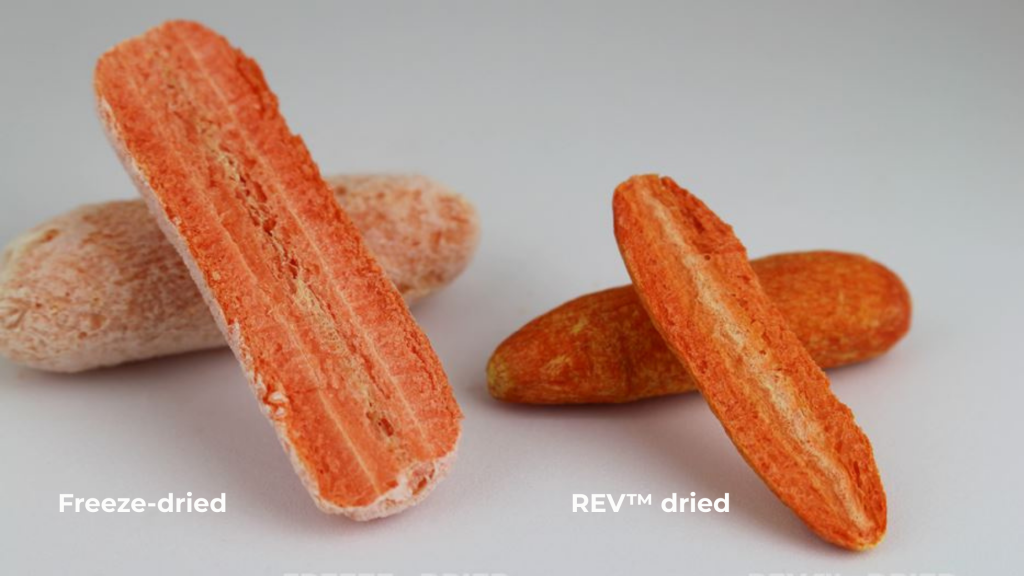
| Freeze drying | Strong retention of structure and sensitive compounds | Long cycles, higher energy use, and greater capital requirements |
| Vacuum drying | Lower boiling temperature than atmospheric drying | May require longer processing or specialized equipment |
| Microwave drying | Rapid volumetric heating | Requires careful power and load control |
| Vacuum microwave drying | Low-pressure drying with rapid internal heating | Must be developed for the specific product and process target |
The right method is the one that meets the product brief at a commercially realistic cost.
What is the best commercial drying method for herbs and botanicals?
For herbs and botanicals, the best method usually prioritizes aroma, volatile oils, color, and bioactive stability. Commercial herb drying should limit excessive heat, oxygen exposure, and long residence times.
Manufacturers should evaluate:
- Product temperature.
- Vacuum level or oxygen exposure.
- Aroma retention.
- Color changes.
- Essential oil preservation.
- Final moisture and water activity.
Air drying can be suitable for some herbs when temperature and airflow are controlled. Freeze drying may provide strong aroma and color retention but can be expensive for high-volume applications. Vacuum microwave drying may be a good fit when the goal is to reduce drying time while controlling product temperature and moisture.
REV™ may be relevant for selected botanical applications because vacuum and microwave power density can be adjusted to support a rapid, controlled process. The result should be verified through aroma testing, color measurements, potency analysis, and storage trials.
What is the best fruit dehydration technology?
For fruits, the most important quality targets are color, flavor, texture, antioxidants, and vitamin retention. Fruits often contain high moisture and delicate tissues, which makes them sensitive to browning, collapse, and prolonged heat exposure.
Teams should evaluate:
- Browning and color retention.
- Vitamin C and antioxidant stability.
- Texture and porosity.
- Flavor intensity.
- Water activity.
- Rehydration behavior.
- Moisture uniformity.
Freeze drying can provide excellent quality for premium fruit pieces, but it may not always fit a cost-sensitive or high-throughput application. Research comparing drying methods shows that vacuum microwave and hybrid approaches can deliver strong nutrient and quality retention for certain fruits, although outcomes depend on the recipe and process settings.
REV™ can be considered for fruit snacks, fruit pieces, fruit powders, and fruit-based inclusions where brands need shelf stability, appealing color, and a differentiated texture.
What is the best vegetable drying method?
For vegetables, the best drying method depends on nutrient preservation, color, structure, rehydration, and final use. Vegetables may be dried as pieces, flakes, powders, or inclusions for soups, ready-to-eat meals, snacks, and ingredient blends.
Important evaluation points include:
- Vitamin and mineral retention.
- Color and structure.
- Rehydration speed.
- Water activity.
- Texture after storage.
- Yield and throughput.
Controlled hot-air drying can be practical for some vegetable applications, while freeze drying may be appropriate for premium pieces. Vacuum microwave drying may offer a useful alternative when manufacturers need shorter cycles and control over final moisture.
The process should be tested with the intended cut size and loading pattern. A method that works for thin carrot slices may not produce the same result with thick potato pieces or dense vegetable blends.
What is the best method for dairy and cheese?
For dairy and cheese, the best drying method must protect protein functionality, flavor, fat stability, solubility, and texture. Dairy products can be sensitive to protein denaturation, fat oxidation, and moisture-related changes.
Manufacturers should assess:
- Protein retention and functionality.
- Fat oxidation.
- Solubility or dispersion.
- Final texture.
- Flavor and aroma.
- Moisture uniformity.
- Storage stability.
Spray drying is widely used for dairy liquids and protein solutions. Freeze drying can support specialty products and premium textures. Vacuum microwave drying may be suitable for cheese pieces, dairy snacks, and certain dairy-based ingredients where the objective is to create a stable, crunchy, or porous format.
EnWave REV™ technology is also a great fit for dairy and cheese applications. The best results still depend on the product formulation, solids content, desired texture, and final moisture target.
What is the best protein drying technology?
For meat, poultry, seafood, plant proteins, and alternative proteins, the best protein drying technology must address safety, texture, nutrition, and shelf life together. The process must achieve the required water activity while maintaining an acceptable bite and flavor profile.
Key evaluation areas include:
- Pathogen control and validated safety steps.
- Water activity reduction.
- Moisture uniformity.
- Protein functionality.
- Fat oxidation.
- Texture and chew.
- Shelf life.
- Packaging performance.
Drying should not be treated as a substitute for a validated food safety system. Meat and poultry products require appropriate cooking, handling, drying, and storage controls.
Vacuum microwave drying may be useful for protein snacks and ingredients where manufacturers want to create shelf-stable formats with controlled texture. It can also support alternative proteins that need to become more transportable, stable, or snackable. The product and process must be validated through microbiological, water activity, texture, and shelf-life testing.
What is the best method for nutraceutical ingredients?
For nutraceutical ingredients, the main quality priority is bioactive stability and potency. Vitamins, antioxidants, botanical compounds, enzymes, and other functional materials can be sensitive to heat, oxygen, moisture, and light.
Manufacturers should evaluate:
- Active compound retention.
- Potency through shelf life.
- Oxygen exposure.
- Residual moisture.
- Temperature history.
- Encapsulation or carrier interactions.
- Solubility and dosage uniformity.
Freeze drying may be suitable for highly sensitive materials, but it can be costly and slow. Spray drying may work well for liquid formulations and encapsulated ingredients. Vacuum microwave drying may fit selected nutraceutical applications where rapid, low-pressure dehydration is compatible with the material.
The process should be supported by potency testing before drying, after drying, and throughout storage. A low process temperature alone does not prove that an active compound remains stable.
What is the best drying method for powders?
For powders, the best method protects solubility, flowability, particle structure, and resistance to moisture regain. Powders can fail commercially if they cake, absorb humidity, dissolve poorly, or lose potency during storage.
Manufacturers should evaluate:
- Particle size and structure.
- Solubility or dispersibility.
- Bulk density.
- Flowability.
- Hygroscopicity.
- Moisture regain.
- Water activity.
- Packaging barrier performance.
Spray drying is often used for liquid-to-powder conversion. Freeze drying can create porous powders with strong rehydration, but the cost may be higher. Vacuum microwave drying may be useful for selected solid or semi-solid materials that are later milled into powders.
The drying process and packaging must be considered together. A powder with good initial stability can still deteriorate quickly if it is exposed to humid air during filling, shipping, or consumer use.
How does nutrient retention compare across methods?
Nutrient retention varies by nutrient, ingredient, pretreatment, temperature, time, oxygen exposure, and final moisture. There is no universal retention percentage that applies to every product.
Controlled drying can preserve some nutrients well, while others are more sensitive. Vitamin C, for example, is often more vulnerable to heat and processing than minerals, fiber, protein, or fat.
Studies comparing multiple methods have found that freeze drying and hybrid methods can provide strong retention for certain fruit nutrients and bioactives. Vacuum microwave drying may also perform well when the process is properly controlled.
Manufacturers should use product-specific laboratory data rather than relying on generic method rankings.
Where can REV™ be a good fit?
REV™ may be a good fit when a manufacturer wants rapid, controlled dehydration with a focus on texture, flavor, color, nutrients, and shelf stability. EnWave describes REV™ as combining vacuum and microwave energy to control product temperature and final moisture.
Potential applications include:
- Fruit and vegetable snacks.
- Dairy and cheese pieces.
- Meat and protein snacks.
- Functional ingredients.
- Herbs and botanicals.
- Shelf-stable food inclusions.
- Specialty powders.
REV™ can be particularly relevant when commercial freeze drying is too slow or expensive for the intended product, or when conventional hot-air drying does not preserve the desired quality. Product-specific trials are essential.
When might another drying method be preferable?
Another drying method may be preferable when it matches the product’s format, volume, and quality requirements more closely. No technology should be selected solely because it is newer or faster.
Examples include:
- Spray drying for large volumes of pumpable liquids.
- Freeze drying for highly sensitive products requiring specific porous structure.
- Hot-air drying for robust ingredients where cost and established production are priorities.
- Vacuum drying for materials that benefit from lower-temperature evaporation.
- Hybrid drying for products requiring a combination of quality and cost advantages.
A balanced recommendation builds trust with procurement teams and food scientists. The best supplier will help determine where its technology fits and where another method may be more practical.
How should manufacturers evaluate commercial food dehydration technology?
Manufacturers should evaluate commercial food dehydration technology through product trials, technical data, economic modeling, and scale-up testing. A laboratory sample is only one part of the decision.
A strong evaluation should include:
- Quality targets and product specifications.
- Trials with representative raw materials.
- Measurements for moisture and water activity.
- Nutrient, bioactive, and sensory testing.
- Packaging and shelf-life studies.
- Throughput and energy measurements.
- Yield and cost modeling.
- Pilot-to-commercial scale validation.
This process helps the team select the best commercial drying method by ingredient rather than applying one method to every product.
Why does packaging affect the healthiest drying outcome?
Packaging affects the healthiest drying outcome because moisture and oxygen can damage the product after it leaves the dryer. A carefully dried ingredient may regain moisture, lose crispness, oxidize, or lose potency if the package does not provide the right barrier.
Packaging development should consider:
- Moisture vapor transmission.
- Oxygen transmission.
- Seal integrity.
- Light exposure.
- Temperature swings.
- Distribution humidity.
- Opening and closing behavior.
Food preservation is therefore a system that includes processing, packaging, storage, and distribution. The healthiest drying method is only successful if the finished product remains stable until consumption.
Conclusion
The healthiest way to dry food commercially depends on the ingredient and the quality profile that matters most. Herbs need aroma and volatile oil protection. Fruits need color, flavor, antioxidants, and texture. Vegetables need nutrient retention and rehydration. Dairy needs protein and fat stability. Proteins need safety, texture, and water activity control. Nutraceuticals need potency, while powders need solubility and resistance to moisture regain.
REV™ vacuum microwave drying can be a strong option for selected applications because it combines vacuum conditions with microwave energy for rapid, controlled dehydration. However, the right choice should be based on product-specific testing, not broad claims.
The practical rule is simple. Choose the drying method that preserves the qualities your ingredient needs, supports the scale your business requires, and delivers a safe, stable product with a viable commercial cost.
FAQ
What is the healthiest commercial drying method?
There is no single healthiest commercial drying method for every food. The best method depends on the ingredient, nutrient sensitivity, texture, water activity, shelf life, energy use, and production requirements.
Is freeze drying healthier than dehydration?
Freeze drying can preserve structure and some heat-sensitive nutrients very well, but it is not automatically the best choice for every product. Other methods may offer a better balance of quality, cost, throughput, and energy use.
What is the best commercial drying method for fruit?
The best method for fruit depends on whether the product needs premium structure, low cost, high throughput, powder formation, or a specific texture. Freeze drying and vacuum microwave drying may be suitable for quality-focused fruit applications, while controlled hot-air drying may fit other products.
What is the best method for drying herbs commercially?
Commercial herb drying should prioritize aroma, volatile oils, color, oxygen exposure, and temperature control. Controlled low-temperature air drying, vacuum drying, freeze drying, or vacuum microwave drying may be appropriate depending on the herb and target format.
Which food drying method preserves the most nutrients?
Nutrient retention depends on the nutrient and process conditions. Freeze drying and some hybrid methods often perform well for sensitive compounds, while controlled vacuum microwave drying may also provide strong retention in suitable products. Product-specific testing is required.
Is vacuum microwave drying healthy?
Vacuum microwave drying can support quality preservation by combining lower-pressure evaporation with rapid microwave heating. Its nutritional and sensory results depend on the ingredient, drying parameters, and final moisture target.
What is the best method for drying dairy ingredients?
The best method depends on whether the dairy ingredient is a liquid, powder, cheese piece, protein concentrate, or snack. Spray drying, freeze drying, vacuum drying, and vacuum microwave drying may each be appropriate for different applications.
What is the best drying method for meat and proteins?
The best method must achieve validated food safety and water activity targets while preserving texture, nutrition, and flavor. Drying should be evaluated alongside cooking, handling, packaging, and shelf-life controls.
How should manufacturers compare commercial food drying methods?
Manufacturers should compare methods using product trials, nutrient and sensory data, water activity, moisture uniformity, throughput, energy consumption, packaging performance, and cost per finished unit.
Further reading
Effects of Different Drying Methods on Quality and Nutritional Properties
Advances in Vacuum Microwave Drying for Berries
Energy-Efficient Food Drying for Sustainable Preservation
Colorado State University Extension on Drying Vegetables
UC Master Food Preserver Program on Dehydration
EnWave Is Dehydrated Food Still Nutritious?