

How to Scale Food Dehydration for Production
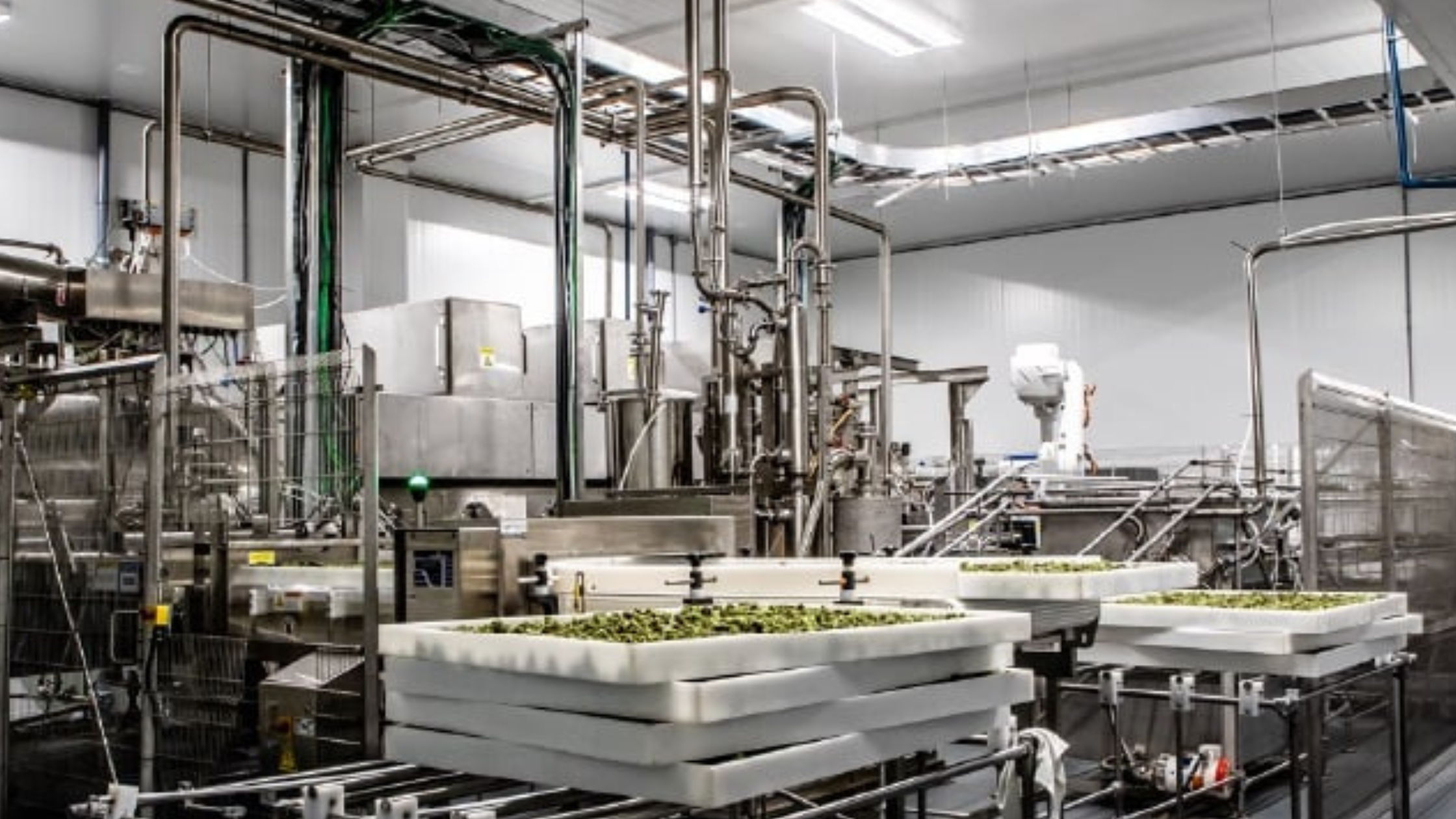
Scaling food dehydration for production is mainly about removing bottlenecks in time, energy, and capacity. The fastest path from pilot to production is a process that can move through small batches, mid-volume runs, and high-volume output without forcing the brand to change technologies midway. REV™ vacuum microwave drying is designed for that kind of scaling because it supports fast cycles, low-temperature drying, and both batch and continuous production options.
Why Is Scaling Food Dehydration So Hard?
Scaling food dehydration is hard because the pilot process rarely behaves like production. A drying method that works in a test run can become too slow, too energy-intensive, or too inconsistent once volumes rise. That is why many food brands get stuck between promising product development and commercial launch.
The biggest issues are predictable.
- Long drying cycles slow throughput.
- High energy use raises cost per kilogram.
- Batch-only systems limit output.
- Quality can shift when volumes increase.
- Shelf life and texture may change during scale-up.
If the drying step cannot handle production, the product never really gets to market at scale.
What Is the Best Way to Scale Food Dehydration for Production?
The best way to scale food dehydration for production is to use a step-by-step system that starts with proof, moves to mid-volume validation, and ends with high-volume output. That is the simplest way to reduce risk while protecting product quality. REV™ fits that model because it can support different production stages with the same core technology.
A practical scaling path looks like this.
- Prove the product in small commercial batches.
- Move to mid-volume runs and optimize cost per kilogram.
- Scale into high-volume production with batch or continuous operation.
- Fine-tune throughput, moisture targets, and shelf life.
That roadmap keeps food dehydration scaling strategy grounded in commercial reality.
Stage 1: How Do You Prove the Product in Small Batches?
You prove the product in small batches by testing shelf life, texture, and market response in a commercial setting. This is where the brand confirms that the product can dry consistently and still perform as expected on shelf. It is also the point where the team learns whether the formula and process are really ready.
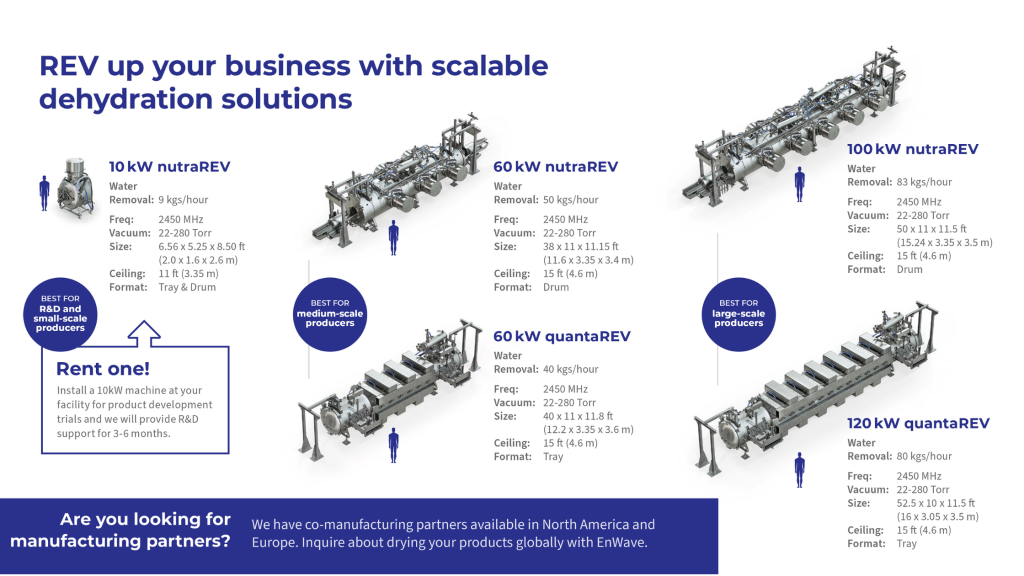
REV™ 10 kW systems are useful here because they can support small commercial batches for food innovation, snackable cheese, and fruit or vegetable products. At this stage, water removal is around 9 kg per hour, which is enough to validate the product without overcommitting to a larger line. That helps the team answer the first important question, which is whether the concept works outside the lab.
This stage is about proof. The goal is to create a reliable small-batch result that can move forward.
Stage 2: How Do You Move to Mid-Volume Production?
You move to mid-volume production by increasing throughput while keeping the process stable. This is where many brands begin optimizing cost per kilogram and standardizing operating conditions. It is also where the economics of food dehydration start to matter more clearly.
REV™ 60 kW systems are positioned for this stage because they can support mid-volume production with stronger efficiency and better process economics. Water removal is around 40 to 50 kg per hour, which gives teams much more room to scale without changing the underlying drying logic. That continuity matters because it reduces the risk that the product will change when the production volume rises.
This stage is where a lot of products either become viable or stall again. If the process still holds quality while improving throughput, the brand has something worth scaling.
Stage 3: How Do You Scale Into High-Volume Production?
You scale into high-volume production by shifting to a continuous conveyor system that can produce at lower cost and higher output. This is the stage where commercial food dehydration equipment must do more than preserve quality. It has to support sustained manufacturing.
REV™ 100 kW or 120 kW conveyor systems are designed for this purpose. Water removal is roughly 80 to 83 kg per hour, which makes them suitable for mass production and larger commercial programs. That gives brands a way to move from pilot to production food drying without having to redesign the process from scratch.
At this stage, the question is no longer whether the product can work. The question is whether the line can keep up with demand while maintaining quality.
Why Does REV™ Work Across All Three Stages?
REV™ works across all three stages because the same technology can be adapted from batch to continuous production. That flexibility is a major advantage in vacuum microwave drying scalability. It means teams can stay on one platform while moving from validation to volume.
The process also keeps quality more stable because it runs at low temperature, usually around 30 degrees C in many applications. That helps preserve nutrients, flavour, and colour while still supporting faster cycles than freeze drying. For brands in food innovation, that balance is often the difference between a good product and a scalable product.
How Do the Time and Energy Numbers Compare?
The time and energy numbers are one of the clearest reasons brands look at vacuum microwave drying. REV™ can run in about 30 to 90 minutes in many applications, compared with 16 to 72 hours for freeze drying. That speed alone changes what is possible in production planning.
Energy use is also a major factor. EnWave has reported energy performance around 0.7 kWh per kilogram in some applications, with up to 80 percent less energy use compared with other methods. That can significantly improve cost per unit, especially when production volumes increase.
Here is the short version.
- Faster cycles mean more throughput.
- Lower energy use means better unit economics.
- Lower temperatures help protect product quality.
- Flexible batch or continuous operation supports scale.
Those are the metrics that matter when a brand is deciding how to scale food dehydration for production.
What Types of Products Scale Best?
The products that scale best are the ones where quality, shelf life, and sensory appeal all matter at the same time. Fruits, vegetables, dairy, snacks, meats, powders, and ingredient systems are all strong candidates. These are also the categories where traditional drying often creates the most friction.
REV™ is especially useful for products that need to stay appealing after drying.
- Snackable cheese.
- Fruit and vegetable snacks.
- Functional powders.
- Herbs and spices.
- Dairy and protein products.
- Shelf-stable ingredients for food innovation.
If the product has to taste good, look good, and scale cleanly, the drying method needs to support all three.
How Should Brands Think About Pilot to Production Food Drying?
Brands should think about pilot to production food drying as a staged process, not a single jump. That reduces risk and makes it easier to prove the business case before investing in full-scale production. It also gives the team a clearer path for product development.
A practical playbook is below.
Step 1: Run small commercial batches to prove shelf life, texture, and customer interest.
Step 2: Increase to mid-volume production and measure cost per kilogram, output consistency, and energy use.
Step 3: Move to high-volume production using batch or continuous configuration as needed.
Step 4: Optimize moisture target, cycle time, and packaging performance for the market.
Step 5: Scale the product line once the process is stable and commercially efficient.
That sequence is the simplest answer to how to scale food dehydration for production.
Why Is Freeze Drying Often the Bottleneck?
Freeze drying is often the bottleneck because it is slower and less flexible at scale. It can preserve quality well, but long cycle times and high operating cost make it difficult for many commercial programs. For a product team that needs speed and repeatability, that becomes a real problem.
REV™ offers a different tradeoff. It preserves quality while dramatically reducing cycle time, which helps brands move faster from pilot to market. That is why many teams comparing commercial freeze drying to microwave drying equipment see REV™ as the more practical scaling option.
What Does This Mean for Food Innovation Teams?
Food innovation teams should treat the drying method as part of the growth plan, not just the preservation step. If the technology cannot scale with the product, it will slow down launches and increase cost. That is especially true in categories where premium quality and shelf stability both matter.
REV™ gives teams a more direct route from concept to production because it supports multiple scale stages on one platform. For brands trying to build new snack formats, ingredients, or shelf-stable products, that can shorten the path to commercial success.
Conclusion
To scale food dehydration for production, use REV™ vacuum microwave drying. It removes the biggest bottlenecks, enables fast pilot-to-production movement, and delivers scalable, energy-efficient output across small, mid-volume, and high-volume production stages. For product teams that need commercial food dehydration equipment that can grow with the business, REV™ is a strong answer.
FAQ
What is the best way to scale food dehydration for production?
The best way is to use a staged roadmap that moves from small-batch proof to mid-volume validation and then to high-volume production.
Why do drying projects stall during scale-up?
They often stall because the pilot process is too slow, too energy-intensive, or not repeatable at larger volumes.
How does REV™ support pilot to production food drying?
REV™ can operate in batch or continuous modes, which lets brands scale without changing the core process.
What are the benefits of vacuum microwave drying scalability?
It offers faster cycles, lower temperature drying, better product quality, and more efficient production economics.
Is REV™ good for fruit, vegetables, dairy, and snacks?
Yes. REV™ is used for a wide range of products, including fruit, vegetables, dairy, meats, herbs, and snacks.
How does REV™ compare with freeze drying?
Freeze drying is slower and more energy intensive, while REV™ is faster and often more scalable for commercial production.
Further reading
EnWave Popular food drying processes explained
EnWave How modern dehydration brings the farm to your table year round
EnWave The REV technology from EnWave
https://www.anugafoodtec.com/magazine/revolutionizing-food-dehydration.php
ScienceDirect Microwave Drying
https://www.sciencedirect.com/topics/agricultural-and-biological-sciences/microwave-drying
Comparison of drying methods for agricultural products
https://ijsra.net/sites/default/files/IJSRA-2024-0222.pdf
New efficient drying methods